How to Wash Jeans?
Jeans are a wardrobe staple. They’re comfortable, versatile, and look good with almost anything. But here’s the thing—many people don’t know how to wash jeans properly. Get it wrong, and you’ll end up with faded colors, stiff fabric, or worse, jeans that fall apart after a few washes.
The good news? Washing jeans the right way is easier than you think. This guide will walk you through everything you need to know about caring for your denim. By the end, you’ll be a jeans-washing expert.
Why Proper Jeans Washing Matters
Your jeans deserve care. Think about it—a good pair of jeans costs money and lasts longer when you treat them well. Poor washing habits can ruin your investment in just a few months.
When you wash jeans incorrectly, a few things happen. The color fades faster. The fabric becomes stiff and uncomfortable. The fibers break down, making your jeans weak. Over time, holes appear and seams split.
The flip side is great. When you wash jeans right, they keep their color vibrant. They stay soft and comfortable. They last for years instead of months. Your jeans maintain their shape and fit. You save money because you’re not replacing them constantly.
Learning proper jeans care takes just a few minutes. The effort pays off every single time you wear them.
How Often Should You Wash Jeans?
This is one of the biggest questions people ask. The answer might surprise you—most jeans don’t need washing very often.
Denim experts agree on one thing: less washing is better. Every time you wash jeans, you’re putting stress on the fibers. The color fades a little more. The fabric gets worn down. So the real goal is to wash jeans only when you actually need to.
How often is that? Here’s a practical guide:
Light wear jeans (ones you wear casually once or twice a week) can go four to six weeks between washes. Yes, you read that right. Weeks. Your jeans will be just fine.
Regular wear jeans (ones you wear often) can usually go two to three weeks between washes. Most people find this sweet spot works well for them.
Heavy wear jeans (work jeans you wear almost daily) need washing every one to two weeks.
There’s a trick to make jeans last longer between washes. Just put them in the freezer for a few hours. This kills bacteria and odors without damaging the fabric. Place them in a plastic bag first, then pop them in the freezer overnight. Your jeans will smell fresh again.
Signs that your jeans actually need washing include stains, bad odor, or visible dirt. If your jeans don’t have any of these issues, they don’t need a wash yet. Skipping unnecessary washes is the best way to keep your denim looking new.
Prepare Your Jeans Before Washing
Jumping straight into the washing machine is a mistake. A little prep work makes a huge difference in the final result.
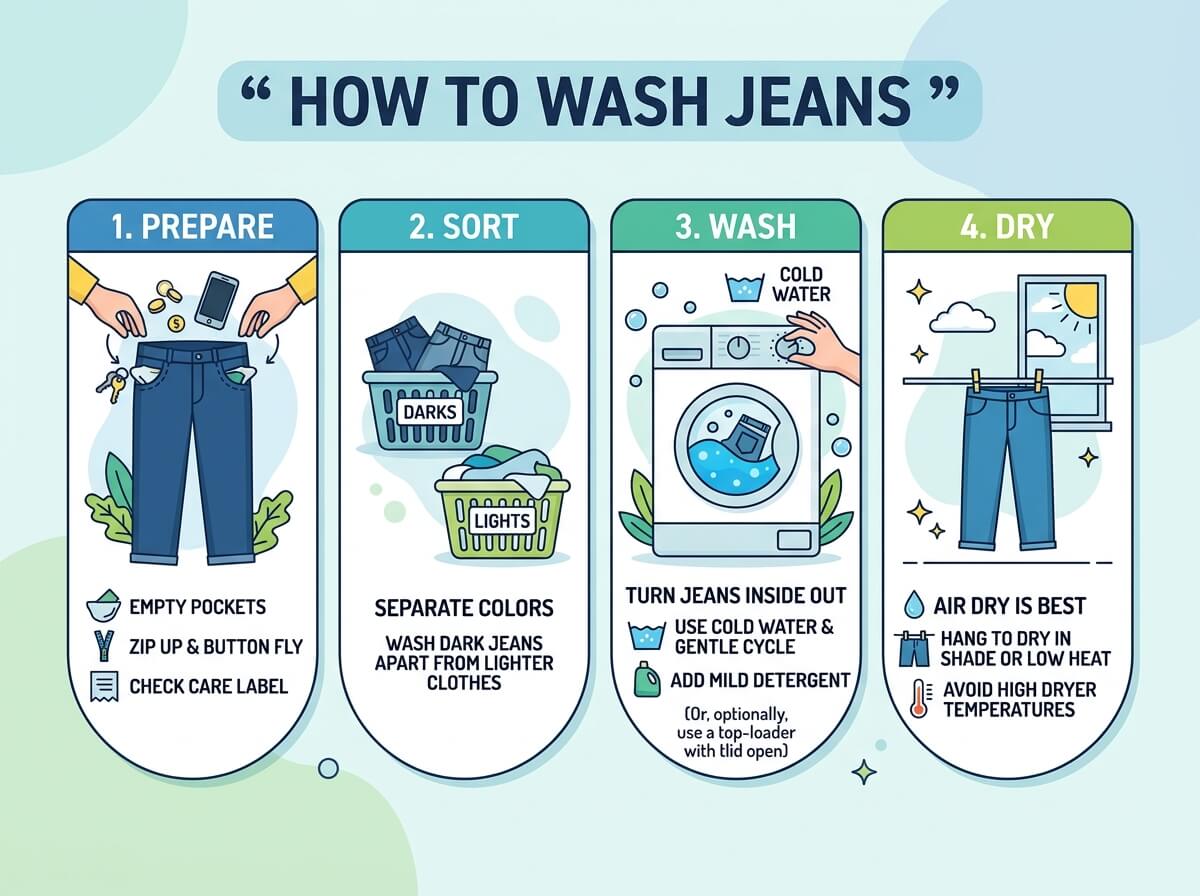
Start by turning your jeans inside out. This is crucial. When the inside of your jeans faces the water and detergent, the outer color stays protected. Your jeans will fade much slower. This single step makes a noticeable difference over time.
Next, check the pockets. Empty them completely. Coins, tissues, and other items can damage your jeans or the washing machine. Take a moment to make sure the pockets are empty.
Close all zippers and button the waistband. This helps your jeans maintain their shape during washing. It also prevents the zipper from snagging other clothes.
Now look for stains. You can treat them before washing. Don’t rub hard—that pushes the stain deeper into the fabric. Instead, blot stains gently with a damp cloth. For tough stains, apply a small amount of stain remover and let it sit for fifteen minutes before washing.
Finally, check for any items stuck in the waistband or cuffs. Lint, dirt, and debris hide in these spots. A quick wipe with your hand removes them.
These prep steps take two minutes but protect your jeans significantly.
Choose the Right Water Temperature
Water temperature matters more than most people realize. Hot water is the enemy of jean color.
Hot water opens up the fibers in denim. This allows color dyes to escape more easily. Your jeans fade faster in hot water. The fabric also becomes weaker over time.
Cold water is your best friend. Cold water keeps the fibers tight and sealed. Color stays locked in. The fabric stays strong.
Here’s what temperature to use:
Cold water is best for all jeans. This is especially true for new jeans or any jeans with deep color. Cold water slows fading significantly.
Lukewarm water works for jeans that are already faded or very old. If your jeans are pale or vintage, lukewarm water is fine.
Warm water can work for heavily soiled jeans, but use it rarely. Save warm water for when your jeans are really dirty.
Hot water should be avoided. Never use hot water for denim washing. It damages the color and the fibers too much.
Most people use cold water for all their jeans. It’s simple, effective, and protects your denim best. Fill your washing machine with cold water before adding clothes. Never add hot water to the mix.
Select the Right Detergent
Not all detergents are created equal. Some are too harsh for jeans.
Regular laundry detergent can work, but it’s not ideal. Standard detergents are made to clean many fabrics. They’re often too strong for delicate denim. Over time, harsh detergents wear down your jeans faster.
Better options exist. Look for these types of detergents:
Gentle or delicate detergent is made for sensitive fabrics. It cleans effectively without being too harsh. This is a good choice for most jeans.
Denim-specific detergent is designed just for jeans. Some brands make detergent formulated to protect jean color. These work great if you want specialized care.
Wool detergent sounds odd, but it works for jeans. Wool detergent is gentle and designed for delicate fibers. It’s perfect for denim.
pH-neutral detergent keeps the fabric balanced. This type doesn’t damage the chemical structure of your jeans.
Avoid these detergent types:
Bleach is a big no. Never use bleach on dark jeans unless you want them permanently lighter. Bleach destroys color and fiber strength.
Optical brighteners in some detergents can fade dark colors. Read the label before buying.
Heavy-duty detergent is too strong. Save it for work clothes and towels, not your favorite jeans.
How much detergent should you use? Less than you think. Use about half the amount recommended on the bottle. Your jeans don’t need a ton of soap. A little detergent works just fine, and less soap is gentler on the fabric.
Washing Machine Settings and Cycles
Your washing machine has many settings. Knowing which ones to use keeps your jeans safe.
The gentle cycle or delicate cycle is best for jeans. These cycles use less agitation and spin. Your jeans get clean without rough treatment. This is the top choice for most people.
The cold water wash setting works perfectly with the gentle cycle. Together, they protect your jeans while cleaning them well.
Some people worry that gentle cycles don’t clean well. They do. Your jeans will be clean. The gentle cycle just takes a little longer, but the results are the same.
Avoid the regular or heavy-duty cycles unless your jeans are extremely dirty. These cycles use lots of agitation. They’re harsh on denim and cause faster fading and damage.
The spin cycle speed matters too. High-speed spinning forces water out quickly but can stress the fibers. Use a lower spin speed if possible. This is gentler on your jeans.
Here’s your ideal washing machine setup:
- Use the gentle or delicate cycle
- Choose cold water
- Add half the recommended detergent amount
- Use a lower spin speed if available
- Wash alone or with similar dark colors
Never wash jeans with light colors or whites. Denim dye can bleed, especially when new. Even older jeans can transfer small amounts of color. Wash jeans with other dark colors only.
Fill the machine but don’t overstuff it. Jeans need room to move in the water. Crowded machines don’t clean as well and stress the fabric more.
Hand Washing Your Jeans
Some people prefer hand washing. It’s actually one of the gentlest methods available.
Hand washing works great for new jeans with lots of color. It also works well if you have expensive or vintage denim you want to baby.
Here’s how to hand wash jeans:
Fill a bathtub or large sink with cold water. Make sure there’s enough water to fully submerge your jeans.
Add detergent. Use just a small amount—about a tablespoon for a full tub. Stir the water gently to dissolve the detergent.
Submerge your jeans. Let them soak in the cold water for fifteen to thirty minutes. Don’t scrub or rub. Just let them sit in the soapy water.
Gently swish your jeans back and forth in the water. This helps the detergent reach all the fabric. Don’t wring or twist. Keep movements gentle.
Drain the soapy water. Let the water out and fill the tub again with fresh cold water.
Rinse thoroughly. Swish your jeans in the clean water to remove detergent. Drain and repeat until the water runs clear. This usually takes three to five rinses. Getting all the soap out is important.
Final squeeze. Gently press your jeans against the tub to remove excess water. Don’t wring them out like you’re wringing out a towel.
Hand washing takes longer but is incredibly gentle. Your jeans will look great for longer. The color stays vibrant, and the fabric stays strong.
Drying Your Jeans the Right Way
How you dry your jeans is just as important as how you wash them.
Never use a clothes dryer for jeans. High heat shrinks denim. It also accelerates fading and damages fibers. The dryer is the enemy of healthy jeans.
Air drying is the way to go. Here are the best methods:
Hang drying is ideal. After washing, gently shake out your jeans. Hang them on a clothesline, drying rack, or shower rod. Make sure they hang straight so the legs don’t crease weirdly. Full air drying takes about twenty-four to forty-eight hours depending on humidity.
Lay flat drying works if you don’t have a place to hang them. Spread your jeans flat on a clean, dry surface. A bed or table works fine. Flip them occasionally so both sides dry evenly. This takes a bit longer than hanging.
Partial drying then hanging is a hybrid method. Let your jeans dry partially laid flat. Once they’re damp but not dripping wet, hang them to finish drying. This prevents excess wrinkles while still protecting the fabric.
Don’t dry jeans in direct sunlight for hours. Some sun is fine and even helps kill bacteria. But prolonged direct sun exposure fades color quickly, especially on dark denim.
Make sure the area where you dry has good air circulation. A breezy room, outdoor location, or area near a fan dries jeans faster.
Never use a heat source like a radiator or space heater. Heat shrinks denim and accelerates fading. Stick with air drying only.
Your jeans should be completely dry before you wear them. Wearing damp jeans feels uncomfortable and can cause wrinkles that are hard to remove.
Dealing with Stains on Jeans
Stains happen. The key is handling them before they become permanent.
Fresh stains are much easier to remove than old ones. Deal with stains as soon as you notice them.
Blot don’t rub. When you see a stain, blot it gently with a clean cloth. Rubbing pushes the stain deeper into the fibers. Blotting lifts the stain off the surface.
Common stains and how to treat them:
For dirt or mud, let it dry completely first. Once dry, brush it off with a stiff brush. Most dirt falls right off. Then wash your jeans normally.
For grease or oil, sprinkle baking soda on the stain. Let it sit for thirty minutes. Baking soda absorbs oil. Brush it off and wash your jeans. For stubborn grease, apply a small amount of dish soap before washing.
For grass stains, mix equal parts white vinegar and water. Blot the stain with this mixture. Let it sit for fifteen minutes. Wash normally.
For ink or pen marks, dab the stain with rubbing alcohol on a cotton ball. Dab gently—don’t rub. Repeat until the stain lifts. Wash immediately after.
For wine or juice, rinse with cold water immediately. Then soak the stain in cold water for thirty minutes. Apply a small amount of stain remover and wash.
For chocolate or food, scrape off dried pieces first. Rinse with cold water. Apply a stain remover stick and let it sit for ten minutes before washing.
Always treat stains before washing. Once a stain goes through the dryer, it’s nearly impossible to remove. So catch stains early and treat them right.
Special Care for Different Jean Types
Different styles of jeans need different care approaches.
Dark or black jeans fade quickly if you’re not careful. Turn them inside out always. Use cold water only. Wash with similar colors. Hand washing is ideal for black jeans because you have more control.
Light or white jeans are less likely to bleed color. However, they can yellow or become dingy. Avoid excessive sun exposure. Don’t let them sit wet. Wash when they need it but not excessively.
Ripped or distressed jeans need extra care. The damage is intentional, but further damage ruins them. Wash on gentle cycle only. Consider hand washing. Avoid rough treatment.
Vintage or heirloom jeans deserve special treatment. Hand wash these. Use the gentlest possible methods. These are often irreplaceable, so be extra careful.
Stretch jeans or jeans with spandex need gentle care too. The elastic breaks down easily in harsh washing. Use cold water and gentle cycles. Don’t use fabric softener—it makes stretch jeans lose their elasticity.
Raw or unwashed denim is special. The first wash is important. Hand wash if possible. Use only a tiny amount of detergent. The first wash sets the color, so be gentle.
Tight or fitted jeans can shrink slightly. Always use cold water. Air dry completely. If they do shrink, wear them damp to stretch them back out gently.
Tips to Make Your Jeans Last Longer
Beyond washing, there are tricks to extend jean life.
Rotate your jeans. Don’t wear the same pair every day. Wearing different jeans gives each pair time to rest and recover between wears. This significantly extends their lifespan.
Store them properly. Fold or hang jeans in a cool, dry place. Avoid tight hangers that create creases. Keep them away from direct sunlight and heat sources.
Repair small damage quickly. A small hole becomes a big hole if you ignore it. When you notice a small tear or loose seam, fix it immediately. This prevents further damage.
Avoid excessive friction. Where your jeans rub against things, they wear faster. The inner thighs are a common trouble spot. You can’t prevent this entirely, but being aware helps.
Use a gentle touch. Don’t yank, pull, or wring your jeans. Handle them kindly. This seems simple but makes a real difference over time.
Brush the fabric. Use a soft brush to remove lint and dust. Brushing is gentler than washing and removes surface dirt. Do this between washes.
Use fabric softener sparingly. A tiny bit of fabric softener makes jeans softer. But too much breaks down fibers and removes color. Use it rarely, if at all.
Check pockets and seams. Holes often start at seams or in pockets. Inspect these areas regularly. Catch problems early.
Common Jeans Washing Mistakes to Avoid
Even with good intentions, people make mistakes. Here are the biggest ones:
Using hot water. This fades color fast and damages fibers. Always use cold water.
Overstuffing the machine. Clothes need room to move. Don’t cram too many jeans in one load.
Using too much detergent. More soap isn’t better. It leaves residue and wears out fabric faster.
Washing with light colors. Denim bleeds. Wash jeans with darks only, especially when new.
Using the dryer. Heat is the enemy. Air dry every time.
Washing too frequently. Jeans don’t need frequent washing. More washing equals faster deterioration.
Washing inside-out incorrectly. Make sure the inside is actually facing out. Check before running the machine.
Ignoring stains. Treat stains before washing. After the dryer, they’re permanent.
Using bleach or harsh chemicals. These destroy denim. Stick to gentle detergents.
Not checking care labels. Your jeans’ tag has information. Read it. Follow the instructions specific to your jeans.
Storing Clean Jeans Properly
After you’ve washed and dried your jeans perfectly, storage matters.
Fold or hang. Both methods work. Fold if you have limited space. Hang if you have room and good hangers.
Use padded hangers. Regular wire hangers create creases and can stretch the waistband. Padded or wooden hangers are gentler.
Avoid damp storage. Make sure jeans are completely dry before storing. Moisture causes mildew and mold.
Keep away from direct sun. A dark closet or drawer is ideal. Sunlight fades denim over time.
Store with similar items. Keep jeans away from rough fabrics that cause pilling or damage.
Avoid plastic bags. These trap moisture. Use cloth bags or hang jeans freely if possible.
Don’t use cedar or mothballs. These can damage denim and leave smells. Good ventilation is better.
Arrange by color. Light jeans separate from dark. This prevents any color transfer if something shifts.
When to Let Go of Old Jeans
Even with perfect care, jeans eventually reach the end. Here’s when to retire them:
Multiple holes that can’t be patched, extensive fading that’s uneven, seams that are falling apart, the waistband that won’t stay up, fabric that tears easily from normal wear, and stains that won’t come out despite treatment.
Before throwing them away, consider other options. Old jeans can be repurposed. Cut them into shorts, make patches for other clothes, use them as rags or cleaning cloths, donate them to thrift stores, or give them to friends who like distressed denim.
Even at the end of their life, your trusty jeans have value.
Frequently Asked Questions About Washing Jeans
Can I wash new jeans with old jeans?
New jeans have loose dye. Wash new jeans alone for the first two to three washes. After that, they can wash with other dark clothes.
How do I get rid of jean smell without washing?
Freeze them, hang them outside for fresh air, or spray a tiny bit of fabric spray. These methods work between washes.
Is it okay to wash jeans inside a mesh bag?
Yes. A mesh laundry bag protects jeans from agitation. It’s especially good for delicate or ripped jeans.
What should I do if my jeans shrink?
Wear them damp and let them stretch back to size. Or wash in warm water and hang dry while slightly damp. Gently pull them into shape.
Can I use regular detergent on jeans?
Yes, but gentle detergent is better. If you only have regular detergent, use less than you normally would.
Why do the legs twist after drying?
The legs are twisted because of how they dried. Straighten them while hanging. Next time, hang them by the waistband or cuffs to prevent twisting.
How do I prevent fading?
Wash less frequently, use cold water always, turn jeans inside out, use gentle detergent, and air dry. These steps combined slow fading significantly.
Is there a right side to hang jeans?
Hang from the waistband so the legs hang straight. This prevents awkward creases.
Final Thoughts on Jeans Care
Taking care of your jeans isn’t complicated. It just requires knowing the basics and being consistent.
Turn them inside out. Use cold water. Choose gentle detergent. Air dry completely. Wash only when needed. These five steps protect your jeans and make them last years longer.
Your jeans are an investment. They deserve proper care. The time you spend learning these techniques is time well spent. Every time you put on a pair of well-maintained jeans, you’ll notice the difference.
Jeans that are cared for look better, feel better, and last longer. Start today. Apply these tips to your next laundry day. Your jeans will thank you. You’ll see the results in how they look and feel, and you’ll save money by keeping them out of the trash longer.
Proper jeans care is simple. You’ve got this.