How to Get Sweat Stains Out of Shirts?
Sweat stains are annoying. You wear a shirt you love, and then boom—ugly marks show up around the armpits or across the back. They make your clothes look dirty even when they’re not. The good news? You can get rid of them.
This guide shows you exactly how to remove sweat stains from your shirts. We’ll cover simple methods, tough stain fixes, and ways to stop them from happening again. Keep reading to save your favorite clothes.
Why Do Sweat Stains Happen?
Before we jump into solutions, let’s understand what creates these stains in the first place.
Sweat by itself is mostly water and salt. It doesn’t stain on its own. The real problem comes from a mix of sweat, dead skin cells, oils from your body, and chemicals in deodorant or antiperspirant. This combo leaves yellow or brown marks that are hard to remove.
The sweat stains you see often contain aluminum compounds from antiperspirant. That’s why some stains look yellow while others appear brownish. Your skin also has natural oils that mix with sweat. This creates the perfect recipe for stubborn stains.
Heat makes it worse. Sweat stains set faster when exposed to hot water or a hot dryer. That’s why acting fast matters. The longer you wait, the harder the stain fights back.
Act Fast: Why Timing Matters
Here’s the truth about sweat stains: fresh stains are easier to remove than old ones.
Fresh sweat stains respond well to quick treatment. Rinse them with cold water right away. This simple step stops the stain from setting into the fabric fibers. Don’t throw the shirt in the wash with warm or hot water yet. Cold water is your first line of defense.
The longer a stain sits, the deeper it soaks into the fabric. After days or weeks, the stain bonds with the fibers. This makes removal much harder. Some very old stains become permanent if not treated right.
Method 1: The Cold Water Rinse
This is the simplest method. Use it as soon as you notice a fresh stain.
What you need:
- Cold water
- Your hands or a soft cloth
Steps:
- Take off the shirt
- Run cold water over the stained area
- Rub the fabric gently between your fingers
- Keep rinsing until the water runs clear
- Let the shirt air dry or wash it normally
This works best on fresh, wet stains. Cold water stops the stain from setting. Hot water makes sweat stains worse because it helps the stain bond to the fabric.
Method 2: Baking Soda Paste
Baking soda is cheap and works on many types of stains. It’s great for sweat marks on underarms.
What you need:
- Baking soda
- Water
- A small bowl
- An old toothbrush or soft brush
Steps:
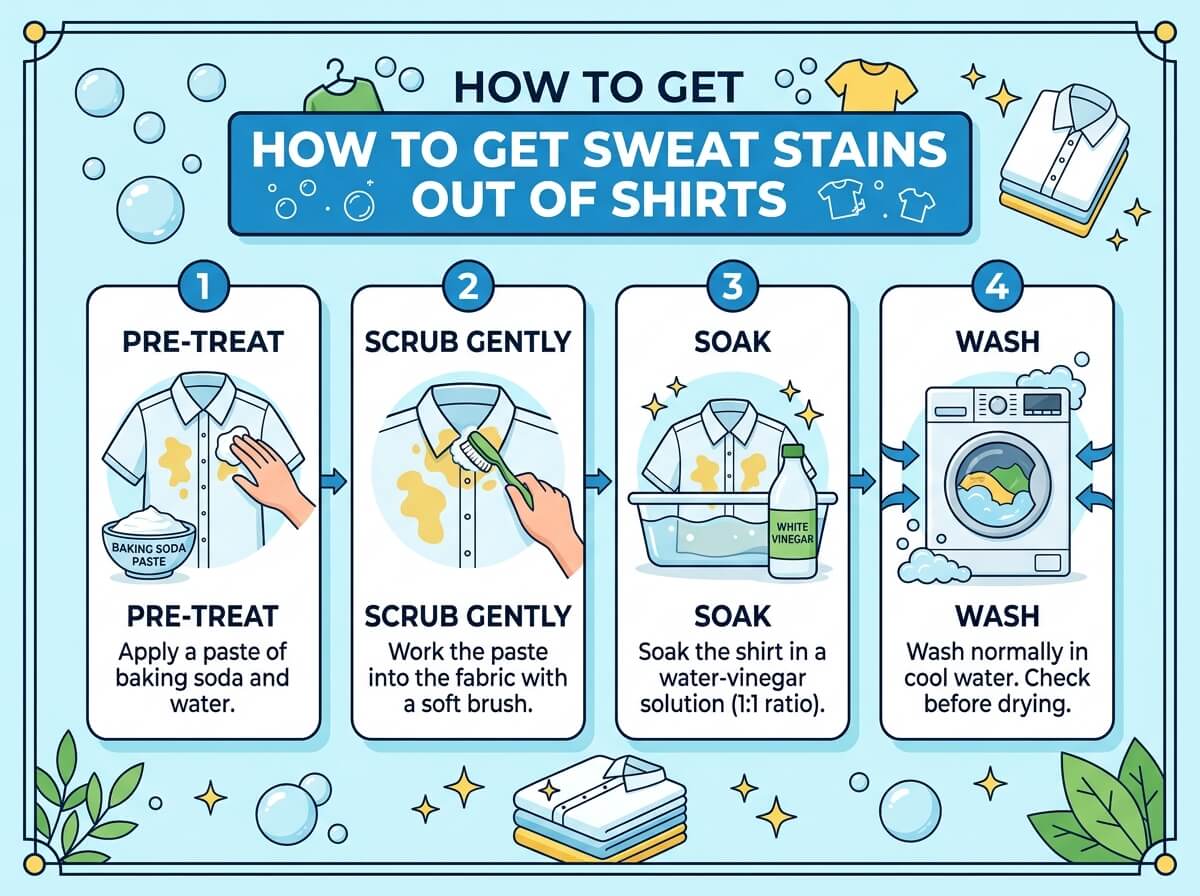
- Mix three parts baking soda with one part water
- Stir until it forms a thick paste
- Apply the paste directly to the stain
- Let it sit for 30 minutes to one hour
- Use the brush to scrub gently
- Rinse with cold water
- Wash the shirt as normal
Baking soda works by lifting the stain away from the fabric. It’s especially good for yellow underarm stains. The powder absorbs the stain while you wait. You might need to repeat this method for tough, old stains.
Method 3: Vinegar Solution
Vinegar is a natural cleaner that cuts through oil and salt deposits left by sweat.
What you need:
- White vinegar
- Water
- A spray bottle or bowl
Steps:
- Mix one part white vinegar with one part water
- Pour the solution into a spray bottle or bowl
- Spray the stained area or soak it in the solution
- Let it sit for 30 minutes
- Scrub gently with a soft brush
- Rinse with cold water
- Wash normally
Vinegar works on both fresh and older sweat stains. The acidic nature of vinegar breaks down the salt and oil that create stains. Some people find the smell of vinegar strong. That smell goes away after you wash the shirt.
Method 4: Enzyme Laundry Detergent
Enzyme-based detergents are made to break down protein stains. Since sweat contains proteins, these detergents work really well.
What you need:
- Enzyme laundry detergent
- A bowl of water
- A brush (optional)
Steps:
- Check the detergent bottle for instructions
- Mix the enzyme detergent with water to form a paste
- Apply it to the stain
- Let it sit for 15 to 30 minutes
- Scrub gently if needed
- Wash the shirt in hot water
- Check the results before drying
Enzyme detergent is different from regular soap. It actually eats away at the proteins in the stain. This makes it one of the most effective methods. You can find enzyme detergents at any store that sells laundry supplies.
Method 5: Hydrogen Peroxide
Hydrogen peroxide is a mild bleach. It works on white and light-colored shirts without causing damage.
What you need:
- Hydrogen peroxide (3% solution from the store)
- A bowl
- A soft cloth or brush
Steps:
- Pour hydrogen peroxide into a bowl
- Soak the stained area in the solution
- Let it sit for 5 to 10 minutes
- Scrub gently with the cloth or brush
- Rinse with cold water
- Wash normally
Hydrogen peroxide breaks down stains through oxidation. It’s safe for most fabrics but test it on a hidden area first if you’re worried. Avoid using it on dark colors as it can lighten the fabric.
Method 6: Salt Paste
Salt is another cheap option that works on fresh stains.
What you need:
- Table salt
- Water
- A small bowl
- A brush
Steps:
- Mix salt with a little water to form a paste
- Apply to the stain
- Let it sit for 5 to 10 minutes
- Scrub gently
- Rinse with cold water
- Wash the shirt
Salt works by drawing moisture out of the fabric and lifting the stain. It’s best for fresh stains. This method might not work as well on stains that have been there for days.
Method 7: Aspirin Solution
Yes, aspirin tablets can help remove sweat stains. This trick works great on tough, old stains.
What you need:
- Two or three aspirin tablets
- A bowl of hot water
- A soft cloth
Steps:
- Crush the aspirin tablets
- Mix them with hot water to dissolve
- Let the solution cool slightly
- Soak the stained area
- Let it sit for 2 to 3 hours
- Scrub gently
- Rinse and wash normally
Aspirin contains salicylic acid. This acid breaks down tough, set-in stains. This method takes longer than others but really works on stains that won’t quit. Patience is key here.
Method 8: Lemon Juice and Salt
Lemon juice is acidic and natural. Combined with salt, it creates a powerful stain fighter.
What you need:
- Fresh lemon juice
- Table salt
- A small bowl
- A brush
Steps:
- Mix lemon juice and salt into a paste
- Apply to the stain
- Let it sit in the sun if possible (sunlight helps)
- Leave it for 1 to 2 hours
- Scrub gently
- Rinse with cold water
- Wash the shirt
The acid in lemon cuts through the stain. The sun acts as a natural bleach. This method works best on white or light-colored shirts. Avoid using it on dark fabrics.
Method 9: Glycerin and Water
Glycerin is a gentle option that works on delicate fabrics.
What you need:
- Glycerin
- Water
- A bowl
- A soft cloth
Steps:
- Mix one part glycerin with one part water
- Apply to the stain
- Let it sit for 30 minutes
- Scrub very gently
- Rinse with cold water
- Wash normally
Glycerin is safe for silk, wool, and other delicate materials. It doesn’t damage fabric the way stronger cleaners might. Use this method for expensive or sensitive clothing.
Method 10: Commercial Stain Removers
Store-bought stain removers are designed to tackle tough marks. They work on sweat stains too.
What you need:
- A commercial stain remover spray or stick
- A soft cloth (optional)
Steps:
- Read the product instructions
- Apply to the stain
- Let it sit for the time recommended
- Rub gently if needed
- Wash the shirt
Many brands make stain removers. Spray options are easy to use. Stick removers give you more control. Test any new product on a small area first to make sure it won’t damage your shirt.
Dealing with Old, Stubborn Stains
Sometimes sweat stains don’t come out with a single method. You might need to combine approaches.
Try this: Use a paste of baking soda first. Let it sit for an hour. Then soak the area in vinegar. Finally, wash with enzyme detergent. The three-step approach targets the stain from different angles.
For really tough stains, repeat treatments. One application might not work. Do the same treatment two or three times. Each time pulls out a little more of the stain.
Keep the fabric wet while treating it. Dry fabric makes stain removal harder. Use cold water throughout the process.
Best Fabrics and Worst Fabrics
Cotton and cotton blends are easy to treat. These fabrics handle aggressive scrubbing and strong cleaners well.
Delicate fabrics need care. Silk, linen, and wool require gentler methods. Use cold water and mild cleaners. Skip the scrubbing brush. Pat instead of rub.
Check your shirt’s care label. Follow the instructions about water temperature and washing. If the label says “dry clean only,” take the shirt to a professional cleaner. They have special tools for tough stains.
The Dryer Decision
Never put a stained shirt in the dryer until the stain is gone.
Heat sets stains. A hot dryer makes a stain permanent. Even if you’re not sure the stain is gone, air dry first. Check it once it’s dry. If the stain remains, repeat a treatment method.
Only use the dryer after the stain is completely gone and you’ve washed the shirt one final time.
Prevention: Stop Stains Before They Start
The best way to deal with sweat stains is to prevent them from happening.
Wear moisture-wicking fabrics. These pull sweat away from your skin. Synthetic blends and athletic materials work great. Cotton holds sweat close to your body.
Use an antiperspirant. This reduces the amount of sweat your body produces. Deodorant only masks smell. Antiperspirant actually stops sweat. Apply antiperspirant at night for best results. Your skin absorbs it better when you’re not sweaty.
Wear light colors. Sweat stains show up less on white, gray, and other light shades. Dark colors highlight sweat marks.
Change clothes quickly. Don’t stay in sweaty clothes. Sweat dries into the fabric the longer you wear it. Fresh clothes mean fresher-looking shirts.
Wash immediately. Don’t leave sweaty shirts in the hamper for days. Wash them right away. Fresh stains come out easier than old ones.
Avoid the dryer for sweaty clothes. Air dry first. Make sure no stains remain before using heat.
Washing Tips for Sweaty Clothes
When you wash shirts that have sweat stains or might develop them, follow these tips.
Use cold water. Hot water sets stains. Cold water stops them.
Don’t overload the washer. Clothes need room to move. Packed washers don’t clean as well.
Use the right amount of detergent. More soap doesn’t mean cleaner clothes. Too much detergent can leave residue.
Turn shirts inside out. This protects the outer surface from wear while letting the stained areas get cleaned well.
Wash with similar colors. Separate whites from colors. This stops dye transfer.
Don’t mix heavy fabrics with light ones. Heavy jeans can damage delicate shirts in the washer.
Natural vs. Chemical Methods
Both work. The choice depends on what you have at home and your preferences.
Natural methods use items like baking soda, vinegar, lemon, and salt. These are cheap and safe. They work on most stains but might take longer. You probably have these in your kitchen right now.
Chemical methods use hydrogen peroxide, enzyme detergents, and commercial stain removers. These work fast and handle tough stains well. Some people worry about chemicals on their clothes. Most are safe when used as directed.
You don’t have to pick one side. Try a natural method first. If it doesn’t work, move to a chemical option.
Mistakes to Avoid
Don’t make these common errors when fighting sweat stains.
Hot water is your enemy. Cold water only. Hot water makes sweat stains worse.
Don’t rub too hard. Gentle scrubbing works better than aggressive rubbing. You can damage the fabric.
Don’t mix cleaners. Combining bleach with other products can be dangerous. Use one method at a time.
Don’t assume the stain is gone. Check once the shirt is dry. Wet stains can look gone but reappear after drying.
Don’t ignore the care label. Different fabrics need different treatments. Respect what the manufacturer recommends.
Don’t wait too long. Fresh stains are much easier to remove. Deal with them quickly.
Don’t use the dryer until you’re sure. Heat sets stains permanently.
Special Situations
Stains on work clothes: Work clothes often get sweaty. Wash them frequently in cold water. Treat stains immediately.
Stains on gym clothes: Athletic wear is designed to handle sweat. These fabrics usually take aggressive cleaning well. Use enzyme detergent.
Stains on dress shirts: These are expensive and delicate. Use gentle methods. Consider professional cleaning for valuable items.
Stains on vintage or antique clothing: These need extra care. Test any cleaner on a hidden area. Professional cleaning is often worth the cost.
When to Call a Professional
Some stains don’t come out at home. That’s okay. Professional cleaners have tools and knowledge you don’t.
If you’ve tried multiple methods and the stain remains, take the shirt to a dry cleaner. Tell them what the stain is. They can use professional treatments not available at home.
For expensive or sentimental clothing, professional cleaning is worth it. You might spend twenty to thirty dollars on cleaning. That’s cheap compared to replacing an expensive shirt.
The Bottom Line
Sweat stains are fixable. You have options. Start with cold water and a simple method like baking soda paste. If that doesn’t work, try another method. Keep going until the stain disappears.
Act fast on fresh stains. They come out easier. For old stains, be patient and repeat treatments.
Remember to wash in cold water. Never put a stained shirt in the dryer. Prevent future stains by using antiperspirant and wearing moisture-wicking fabrics.
Your favorite shirts don’t have to stay stained. With these methods, you can get them looking new again. Start today with whatever cleaner you have at home. Success is just a few steps away.
Quick Reference: The Methods at a Glance
Here’s a fast lookup for all the methods we covered:
Cold Water Rinse – Best for: Fresh stains. Time: Immediate.
Baking Soda Paste – Best for: Yellow underarm stains. Time: 30-60 minutes.
Vinegar Solution – Best for: Oil and salt deposits. Time: 30 minutes.
Enzyme Detergent – Best for: Protein-based stains. Time: 15-30 minutes.
Hydrogen Peroxide – Best for: Light-colored shirts. Time: 5-10 minutes.
Salt Paste – Best for: Fresh stains. Time: 5-10 minutes.
Aspirin Solution – Best for: Old, tough stains. Time: 2-3 hours.
Lemon and Salt – Best for: White shirts in the sun. Time: 1-2 hours.
Glycerin and Water – Best for: Delicate fabrics. Time: 30 minutes.
Commercial Removers – Best for: Convenience. Time: Varies by product.
Final Thoughts
Sweat stains don’t mean throwing away your favorite clothes. You now have ten solid methods to try. Most people find success with the first or second method they try.
Start with what you have. If you have baking soda, use that. If you have vinegar, go that route. These simple items work amazing well.
Stay consistent. Repeat treatments if needed. Be patient with old stains. They didn’t form overnight and they won’t disappear overnight either.
The real win is prevention. Use antiperspirant. Wear moisture-wicking materials. Wash clothes promptly. Dry them properly. These habits stop sweat stains from becoming a problem.
Now you’re ready. Get that stained shirt, pick a method, and get started. Your shirt will thank you. Before long, you’ll have clean clothes without those annoying marks. That’s a win in anyone’s book.