
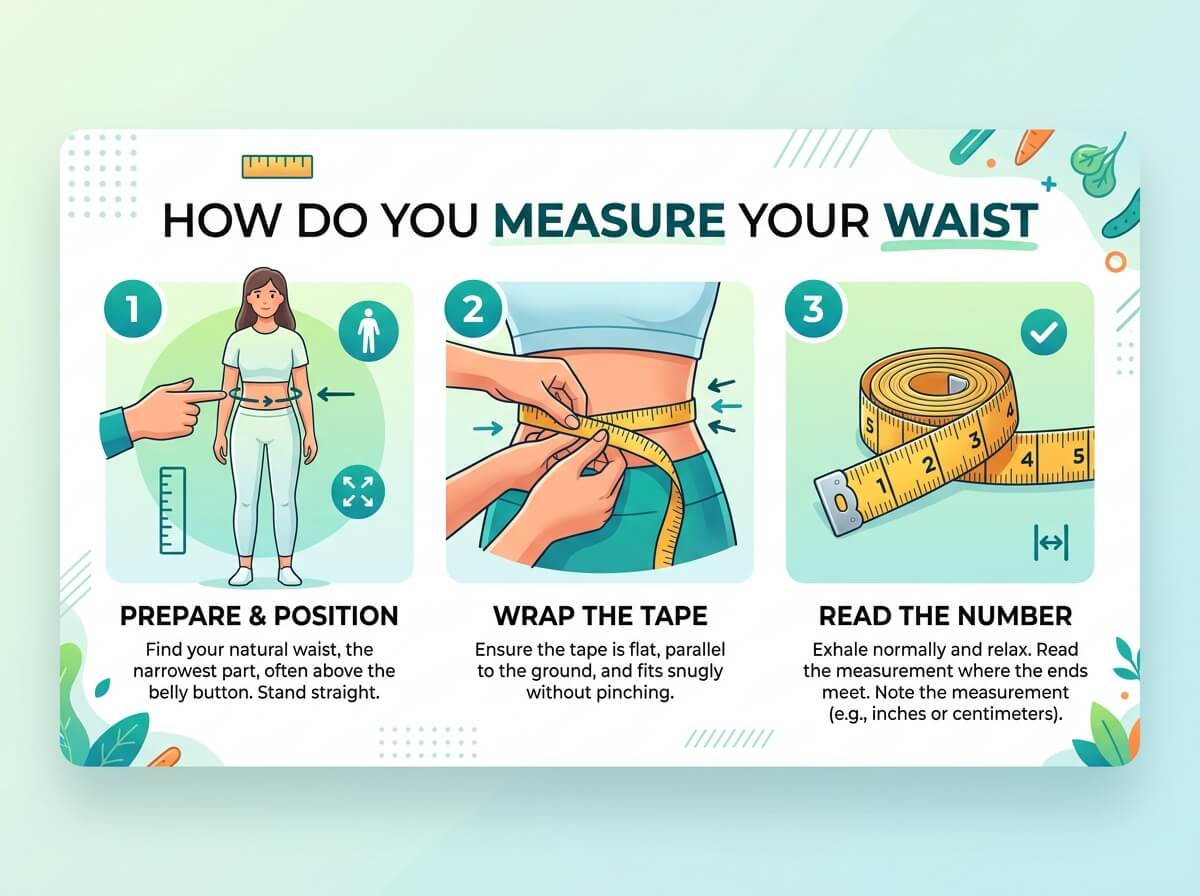
How Do You Measure Your Waist?
Let’s be honest. Measuring your waist might sound like the simplest thing in the world. You grab a tape measure, wrap it around your middle, and boom—you’re done, right?
Well, not quite.
A lot of people get it wrong without even realizing it. They measure in the wrong spot. They pull the tape too tight. They don’t stand properly. And then they get confused why their measurements change or why clothes don’t fit right.
The good news? Once you learn the right way to measure your waist, it takes just a few seconds. You’ll have accurate measurements that you can trust.
This guide will walk you through everything. You’ll learn why measuring matters, what tools you need, how to do it step by step, and common mistakes to avoid.
Why Should You Measure Your Waist?
Before we jump into the how, let’s talk about why this even matters.
Your waist measurement tells you important things about your health. Doctors use it to check if you’re in a healthy range. It helps you track changes in your body over time. It also helps you buy clothes that actually fit.
If you’re working on fitness goals, waist measurement is your friend. The number on the scale can be confusing because muscle weighs more than fat. But your waist measurement shows real changes in your body shape.
You can use waist measurements to:
- Track body composition changes
- Monitor waist circumference for health reasons
- Find the right clothing size
- Set fitness goals
- Measure body shape progress
- Check if your weight loss efforts are working
- Understand your overall health better
Health professionals often look at waist circumference. A larger waist can be linked to certain health risks, like heart disease or type 2 diabetes. That’s why accurate measurements matter.
When you’re buying clothes online or trying different styles, knowing your true waist size helps. No more guessing or getting items that don’t fit.
What You’ll Need to Measure Your Waist
Let’s keep this simple. You don’t need fancy equipment.
A soft measuring tape is all you really need. The kind that tailors use works perfectly. These are flexible and easy to wrap around your body. They usually cost a few dollars.
You can find soft measuring tapes at:
- Craft stores
- Fabric shops
- Drugstores
- Online retailers
- General department stores
Make sure your tape measure is long enough. It should be at least 60 inches, but longer is fine.
Avoid using hard rulers or stiff measuring tapes. They won’t sit right against your body and give you bad readings.
If you don’t have a soft measuring tape, some alternatives work in a pinch:
- String or yarn (measure it against a ruler afterward)
- A belt (wrap it snugly, then measure the belt)
- Flexible rulers from school or craft supplies
But honestly, a soft measuring tape is cheap and worth getting. Keep it somewhere handy. You’ll use it again.
How to Measure Your Waist: Step by Step
Here’s the method most health professionals recommend. Follow these steps and you’ll get an accurate measurement every time.
Step 1: Wear the Right Clothing
Wear light clothing or nothing at all. If you wear heavy clothes, they’ll add thickness and throw off your measurement.
Tight clothes are also a problem. They can squeeze your body and give you a false reading.
Your best bet? Wear thin clothes like a t-shirt, or measure without a shirt. Many people prefer measuring with just underwear or in the bathroom before getting dressed.
Why does this matter? If you measure over thick sweaters or bunched-up shirts, you might add several inches to your true measurement.
Step 2: Stand Up Straight
Stand tall with your feet about hip-width apart. Keep your arms down at your sides, away from your body.
Don’t suck in your stomach. Don’t puff it out either. Just stand naturally. This is the key to an honest measurement.
If you suck in your stomach, you’ll get a smaller number that isn’t real. Next time you measure, you might forget and measure normally, so your numbers won’t match.
Keep your feet flat on the ground. Stand near a mirror if it helps you stay straight.
Your posture matters more than people think. Slouching or leaning changes where your waist is and makes measurements unreliable.
Step 3: Find Your Waist
This is super important. Most people measure in the wrong spot.
Your waist isn’t at your belly button. It’s not at the top of your hip bones either. Well, not always.
Your natural waist is the narrowest part of your torso. It’s the spot where your body curves inward the most. For most people, this is somewhere between their belly button and hip bones.
To find it:
- Feel around your torso with your fingers
- Locate where your body is most narrow
- This spot is usually above your hip bones
- It’s often about one inch above your belly button, but not always
Everyone’s body is different. Some people have their narrowest point a bit higher. Some have it lower. Feel around until you find yours.
Once you find that spot, remember it. Use that same spot every time you measure. This keeps your measurements consistent.
Step 4: Wrap the Measuring Tape
Wrap the soft tape around your waist at the narrowest point you found.
Make sure the tape is:
- Level all the way around (doesn’t dip or rise on any side)
- Snug against your skin
- Not twisted or bunched up
- Parallel to the ground
The tape should touch your skin but shouldn’t compress it. You want it tight enough to stay in place but loose enough that you could fit a finger under it.
This is where many people mess up. They wrap the tape too tight, trying to make the number smaller. But that’s not what you’re measuring. You’re measuring your actual waist, not some fantasy version.
Walk over to a mirror to check that the tape is level and isn’t riding up or down on one side.
Step 5: Read the Measurement
Look down at the number where the tape meets itself. This is your waist measurement.
If the tape doesn’t overlap much, you might need a longer tape measure. If it overlaps a lot, use an extension or wrap the tape different way.
Write down the number. Then measure again. You should get the same or very similar numbers both times. If your numbers are off by more than half an inch, you probably moved the tape, so try again.
Common Mistakes People Make
Let’s talk about the stuff that goes wrong.
Pulling the Tape Too Tight
This is the number one mistake. People pull the tape snug and think they’re measuring, but they’re actually squeezing their waist. This gives a number that’s too small.
Your waist measurement should show your real body size. Not your smallest possible waist with the tape cutting off circulation.
The tape should be snug, but not tight. That’s the sweet spot.
Measuring in the Wrong Location
Some people measure around the belly button. Others measure at the hip bones. Some measure way up at the ribs.
All of these give different numbers. That’s why you need to find your natural waist (the narrowest point) and use that spot every time.
If you keep changing where you measure, your numbers will bounce around. You won’t be able to see real changes in your body.
Measuring While Holding Your Breath
Your torso gets smaller when you hold your breath. That’s not your real waist.
Breathe normally when you measure. In fact, breathe out gently and then measure. That’s your normal waist size.
Measuring Over Clothes
Thick clothing adds inches. Even a regular shirt can add an inch or more.
Always measure over thin clothes or directly against your skin.
Standing Wrong
Your posture changes your measurements. Slouching makes your waist appear smaller. Leaning back makes it appear larger.
Stand straight with good posture. Feet flat. Arms at your sides.
Measuring When Bloated
If you’ve just eaten a big meal or you’re feeling gassy, your stomach might be distended. This gives a false reading.
Measure when your stomach feels normal. Many people like measuring first thing in the morning.
Using the Wrong Tool
A hard ruler doesn’t work. A metal tape measure is too stiff. A string works but only if you measure it carefully afterward.
Use a flexible fabric measuring tape. Period.
How Often Should You Measure?
You don’t need to measure constantly. That’s just going to stress you out.
Once a week is good for tracking changes. Some people like to measure once a month. Others measure every two weeks.
Pick a schedule and stick with it. Measure at the same time of day. Many people measure first thing in the morning before eating or drinking.
Your weight and measurements shift slightly throughout the day. You might be a pound heavier at night. Your waist might be slightly larger after eating. That’s normal.
For the most consistent comparisons, measure under the same conditions each time.
What’s a Healthy Waist Measurement?
Health experts have guidelines for healthy waist circumference. But these can vary based on your sex, age, and overall health.
In general, a larger waist circumference can indicate health risks. But “larger” depends on the person.
For most people, these ranges are considered healthy:
- Men: Under 40 inches
- Women: Under 35 inches
These aren’t hard rules. Your personal healthy range depends on your body type, height, and other factors.
If you’re concerned about what your measurement means for your health, talk to a doctor. They can tell you what’s healthy for your specific body and situation.
Health professionals use waist measurement along with other factors. They look at BMI, overall body composition, and lifestyle. No single measurement tells the whole story.
Tracking Your Waist Measurement Over Time
Once you start measuring, keep a record. This helps you see patterns and progress.
You can:
- Write it down in a notebook
- Use a spreadsheet on your computer
- Use a health tracking app
- Keep it in your phone notes
Include the date and your measurement. You can also note other info like how you felt or what you’ve been doing exercise-wise.
After a few weeks, you’ll start to see trends. Maybe your measurement is getting smaller. Maybe it stays the same. Maybe it fluctuates up and down. That’s all normal.
Real changes take time. Usually, you won’t see noticeable differences in waist size for several weeks. Don’t get discouraged if the number doesn’t change right away.
If you’re working on losing weight or building muscle, waist measurement is a great progress tracker. It often shows results before the scale does.
Measuring Different Body Types
Everyone’s body is different. Some of these tips apply differently depending on your shape.
If You Have a Bigger Belly
Find your natural waist above the belly. This might be higher than your belly button. Measure there, not at the belly button.
If You Have Curves
Your waist might not be hugely narrow, and that’s fine. Measure at the narrowest point you can find. It still counts.
If You’re Pregnant
Measuring your waist works differently when pregnant. Talk to your doctor about what they want to track.
If You Have an Hourglass Shape
Your waist is probably clearly defined. Measure at that narrowest point.
If You Have a Rectangle Shape
Your waist might not curve in much. Find the narrowest spot anyway. Even if it’s not dramatic, that’s your waist.
The point is: there’s no “wrong” body type. Just find your natural waist and measure there.
Using Your Waist Measurement for Clothes Shopping
Knowing your waist measurement helps with buying clothes. Different brands size things differently, so use actual measurements when possible.
When shopping online, check the size chart. Most sites list waist measurements for each size.
If the chart says size medium is 28-30 inches around the waist, you know if that will fit.
This beats guessing based on sizes, which vary wildly between brands.
For jeans and pants, waist measurement is especially useful. The number on the label might be off by an inch or more.
Measure your favorite pants at the waist. Use that real measurement when buying similar styles.
Measuring Your Waist for Health and Fitness Goals
If you’re working on fitness or health goals, waist measurement is a useful tool.
For Weight Loss
Track your waist along with your weight. Sometimes waist measurement drops before the scale does. This keeps you motivated.
Your waist measurement is especially useful if you’re strength training. You might lose fat while gaining muscle, so the scale stays the same. But your waist gets smaller. This shows you’re making progress.
For Muscle Building
As you build muscle, your waist might stay the same size or even get slightly larger if you’re gaining overall weight.
But your body composition changes. More muscle, less fat. Your waist measurement shows this.
For Health Monitoring
If you’re managing a health condition like diabetes, your doctor might track your waist measurement. This gives useful information about fat distribution and overall health.
Measure regularly and bring your records to your doctor’s visits.
Tips for Getting the Most Accurate Measurement
Here are some pro tips for the best results:
- Measure two or three times each session and average the numbers
- Have someone else take the measurement if possible (they won’t tilt the tape accidentally)
- Use the same tape measure each time if you can
- Measure at the same time of day
- Don’t measure right after eating
- Don’t measure when bloated
- Keep the tape level by using a mirror
- Don’t hold your breath
- Write down measurements immediately so you don’t forget
- Take a photo of the tape measure against your waist for a visual record
The more consistent you are, the more useful your measurements become.
What If Your Measurements Keep Changing?
If your waist measurement jumps around a lot, something’s off. You might be:
- Measuring at different spots each time
- Using different amounts of tape tension
- Measuring at different times of day
- Measuring with different clothing on
Try to control these factors. Once you nail down your technique, your numbers will stabilize.
Small fluctuations of half an inch are normal. Bigger jumps suggest measurement error.
If your measurement genuinely seems to be changing a lot, think about what else might be going on. Are you eating differently? Exercising more? Stressed? All of these affect your body.
Waist Measurement vs. Other Body Measurements
Your waist is one measurement, but it’s not the whole picture.
You could also measure:
- Bust or chest
- Hips
- Thighs
- Biceps
- Neck
Some people track multiple measurements to get a fuller picture of their body.
Waist measurement is popular because it’s useful for both health and clothes. But if you want to see all your progress, tracking a few spots can help.
Just remember to measure each spot the same way every time.
Body Composition vs. Waist Circumference
Your waist measurement tells you your girth at one spot. It doesn’t directly measure body fat or muscle.
But it’s useful because it can indicate how much body fat you’re carrying, especially around your midsection.
A smaller waist usually means less fat there. But the only way to know exactly how much muscle versus fat you have is through other methods like body composition testing.
Those tests are more complex and expensive. Most people rely on waist measurement along with weight and how they feel.
Final Thoughts on Measuring Your Waist
Measuring your waist is simple once you know how. Stop overthinking it.
Get a soft measuring tape. Find your narrowest point. Wrap it snug but not tight. Read the number. Done.
Do it consistently. Measure at the same spot, same time of day, same tension on the tape. Your measurements will be reliable and useful.
Use this number to:
- Track your progress
- Buy clothes that fit
- Monitor your health
- Understand your body better
- Stay motivated toward your goals
Remember that a single measurement is just one piece of information. Your overall health depends on many factors: diet, exercise, sleep, stress, genetics, and more.
But tracking your waist circumference is one simple, free way to keep tabs on your body.
Don’t stress about reaching a certain number. Focus on consistency. When you see your waist measurement getting smaller over time, you know your efforts are paying off.
And if it stays the same? That’s information too. Maybe you need to adjust your approach. Maybe your body is holding steady, which is good.
The point is to measure accurately so you know what’s real. From there, you can make informed decisions about your health and fitness.
Now go grab that measuring tape. You’ve got this.
Mary is a fashion enthusiast and lifestyle writer who loves discovering stylish clothing, accessories, and everyday fashion essentials. She enjoys researching the latest trends, reviewing popular products, and sharing practical style tips to help readers dress with confidence. Through FashionSolve.com, Mary provides honest recommendations, fashion guides, and inspiration for building a wardrobe that is both stylish and affordable.
