How Often Should You Wash Your Hair?
Your hair tells a story about who you are. It frames your face. It shows the world how much you care about yourself. But here’s the thing—most of us get the basic care all wrong.
The question of how often to wash your hair seems simple. Yet it confuses people every single day. Walk into any salon and you’ll hear different answers. Ask your friends and you get even more opinions. Some people swear by daily washing. Others go weeks between shampoos.
So what’s the real answer? How often do you wash your hair?
The truth is more nuanced than a simple number. Your ideal hair washing frequency depends on several factors. Your hair type matters most. Your lifestyle plays a role too. Even your water quality affects things.
Let me break this down for you.
The Science Behind Hair Washing
Before we dive into how often you should wash, let’s talk about what actually happens when you wash your hair.
Your scalp produces oils. These oils are called sebum. Sebum gets a bad reputation, but it’s actually your friend. It protects your scalp. It keeps your hair shiny and strong. It shields your strands from damage and dirt.
When you wash your hair, you strip away these natural oils. Your scalp notices this. It panics a little. Your body thinks, “Oh no, we lost all the protective oil! Better make more!” So your scalp goes into overdrive. It pumps out even more sebum than before.
This creates a cycle. You wash your hair. Your scalp overproduces oil. Your hair gets greasy. You feel like you need to wash again. And around and around you go.
The key to breaking this cycle? Wash less often. When you give your scalp time to adjust, something magical happens. It stops overproducing oil. Your hair naturally stays cleaner for longer. This is sometimes called “training your scalp.”
Does scalp training work? Yes, it does. But it takes time. Most people need two to three weeks before they see real results. Your hair might feel greasy during this period. Stick with it anyway.
Hair Type Matters Most
Not all hair is the same. Your hair type is the biggest factor in deciding your washing schedule.
Straight Hair
Straight hair has an advantage. The natural oils from your scalp travel down the hair shaft easily. This keeps straight hair looking shiny and healthy. But it also means straight hair gets greasy faster.
If you have straight hair, you probably need to wash twice a week. Some people with very fine straight hair might even need to wash every two or three days. The key is finding what works for you.
Watch how your hair looks and feels. Does it look oily by day three? Then wash on day three. Your hair will tell you what it needs.
Wavy Hair
Wavy hair falls between straight and curly. The waves create texture that helps hold natural oils closer to your scalp. This means wavy hair tends to stay cleaner longer than straight hair.
Most people with wavy hair do well washing once or twice a week. Some can stretch it to every four or five days. It depends on how oily your scalp gets and how much texture you have.
The curls and waves are assets. They hold your style better when you don’t wash too often. Many people with wavy hair find that their waves look best on day two or three after washing.
Curly Hair
Curly hair is delicate. The curls prevent natural oils from traveling down the hair shaft efficiently. This means curly hair is naturally drier than straight hair.
If you have curly hair, you can wash less often. Most curl-haired people wash once a week or even every ten days. Some only wash every two weeks.
This doesn’t mean you never rinse your curls. Many curly-haired people do a rinse with water between shampoos. They use conditioner to refresh their curls. But actual shampooing? That happens less often.
Curly hair needs moisture. Frequent washing strips away what little oil reaches the ends. So curly-haired people benefit the most from a longer washing schedule.
Coily Hair
Coily hair is the most delicate of all. The tight coils make it very hard for natural oils to travel down the hair shaft. Coily hair is naturally the driest hair type.
If you have coily hair, wash even less often. Many people with coily textures shampoo only once or twice a month. Some wash every two weeks.
Between washes, people with coily hair often use water rinses and deep conditioning treatments. They might co-wash, which means washing with conditioner only, no shampoo. This keeps their hair clean without stripping away all the natural moisture.
Coily hair is strong and beautiful. It deserves a gentle approach to cleansing.
Your Scalp Health Affects Everything
Your scalp health is just as important as your hair type. Even if you have straight hair, your scalp might not be oily. Or maybe you have curly hair but a very oily scalp.
Oily Scalps
An oily scalp produces a lot of sebum. Your hair might look greasy by day two or three. The roots feel heavy. You might even get a shiny look on your forehead and temples.
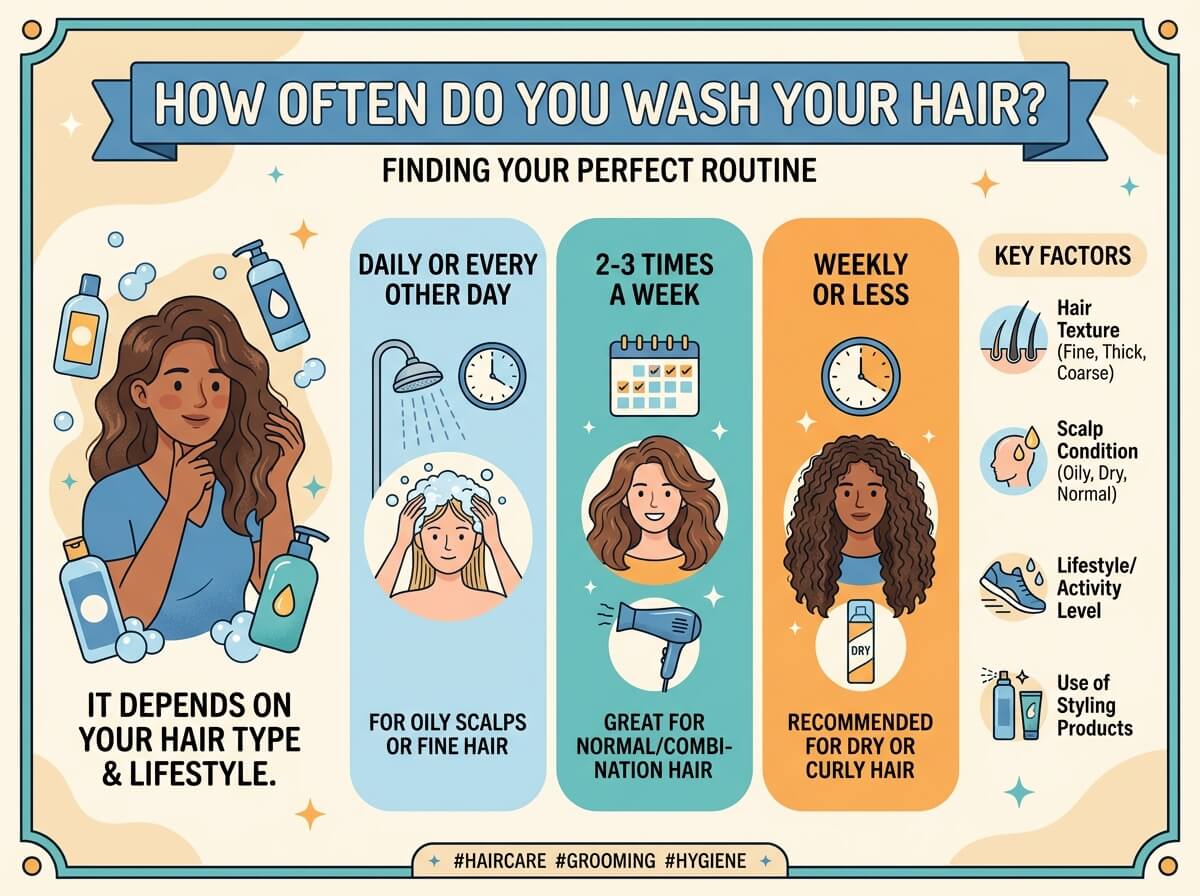
If this describes you, wash your hair more often. Two or three times a week is typical. Some people with very oily scalps wash every other day.
Don’t panic if you have an oily scalp. It’s usually hereditary. Your parents probably dealt with the same thing. The good news? An oily scalp usually means your scalp is happy and healthy. It’s working hard to protect your hair.
Normal Scalps
A normal scalp produces a balanced amount of oil. Your hair looks fresh and clean for several days after washing. The roots feel light. Your hair has a natural shine without looking greasy.
If you have a normal scalp, you’ve got it easy. Wash your hair once or twice a week depending on your hair type. Your hair will love you for it.
Dry Scalps
A dry scalp produces very little sebum. Your scalp might feel itchy or flaky. You might see white flakes, which could be dry scalp or dandruff. Your hair feels dry even when clean.
If you have a dry scalp, wash less often. This gives your scalp time to build up its protective oils. Once or twice a week might even be too often. You might do better washing every five to seven days.
When you do wash, use a gentle shampoo. Follow up with a good conditioner. Your scalp needs time to recover between washes.
Lifestyle Factors Count Too
How you spend your days affects how often you need to wash.
Active Lifestyles
Do you exercise regularly? Do you play sports? Do you work outside in the heat? Then you probably sweat more.
Sweat itself isn’t the problem. It’s actually not that dirty. But sweat plus dust, dirt, and bacteria creates buildup. This buildup makes your hair feel greasy and look dull.
If you have an active lifestyle, you might need to wash more often. Three times a week is common. Some people wash right after workouts.
But here’s a pro tip: You don’t always need shampoo after sweating. A quick rinse with just water and a light conditioner can work. This refreshes your hair without harsh shampooing.
Sedentary Lifestyles
Spend most of your day at a desk? Work indoors in an air-conditioned office? Then you might not sweat much or get your hair dirty.
If this is your life, you can wash less often. Once or twice a week might be all you need. Your hair stays cleaner longer when you’re not active.
Pollution and Environment
Where you live matters too. Living in a polluted city means your hair gets dirtier faster. Pollution particles settle on your hair. They make it look dull and tired.
If you live in a polluted area, wash more often. Three times a week might be necessary. You might also consider wearing your hair up or using a hat outside to protect it from pollution.
Living somewhere with clean air? You can wash less. Your hair stays fresher naturally.
Humidity and Climate
Hot, humid climates make your hair frizz and feel sticky. This makes it feel dirtier even when it’s clean. You might feel like you need to wash more often.
But here’s the thing: Humidity doesn’t actually make your hair dirty. It just makes it feel less smooth. You might get away with less frequent washing than you think.
Cold, dry climates do the opposite. Your hair might feel dry and uncomfortable. Washing less often helps preserve natural oils that protect your hair from drying out further.
Water Quality Impacts Your Hair
The water coming from your shower deserves a moment of attention.
Hard water contains minerals like calcium and magnesium. These minerals build up on your hair. They make your hair feel heavy and look dull. They can cause tangles and make styling harder.
If you have hard water, your hair gets “dirty” faster from mineral buildup. You might think you need to wash more often. But sometimes the problem isn’t dirt. It’s mineral buildup.
What can you do? Install a shower filter. A good filter removes these minerals. Your hair will feel softer and fresher longer. You might even find you can wash less often.
Soft water is easier on your hair. If you have soft water, consider yourself lucky. Your hair stays cleaner and fresher longer naturally.
When to Wash Based on Hair Goals
Sometimes it’s not just about cleanliness. Your hair goals matter too.
If You Want Maximum Shine
Natural oils create shine. To maximize shine, wash less often. Let those oils build up a little. Your hair will glow.
Wash once or twice a week. Avoid washing right before important events. Wash a day or two before so oils have time to spread.
If You Want Volume
Frequent washing can weigh hair down. To get volume, wash less often. Dry shampoo helps add texture and volume between washes.
Try washing every three to four days. See how your hair responds.
If You Want to Preserve Color
If you color your hair, frequent washing fades your color. Shampoo opens the hair cuticle. Water rinses out color molecules.
To preserve color, wash less often. Most colorists recommend washing no more than twice a week. Some say once a week is even better.
Use a color-safe shampoo and conditioner. These are gentler on color. They help your color last longer.
If You Want Strong, Healthy Hair
Strong hair comes from being gentle with your strands. Less frequent washing equals less stress on your hair. Your hair breaks less. It grows stronger.
Wash once or twice a week. Use lukewarm water, not hot. Hot water opens the cuticle and causes damage. Finish with a cool rinse to seal the cuticle.
The Right Way to Wash Your Hair
How you wash matters as much as how often.
Use the Right Temperature
Warm water works best. It opens your cuticle so shampoo can cleanse. But don’t use hot water. Hot water damages your hair and opens the cuticle too much.
Finish with cool water. This seals the cuticle. Your hair looks shinier and feels smoother.
Don’t Overscrub Your Scalp
When you shampoo, you don’t need to scrub hard. Gentle massage is enough. Use your fingertips, not your nails. Work the shampoo into a lather.
Vigorous scrubbing can irritate your scalp. It can also tangle your hair and cause breakage. Be gentle.
Focus Shampoo on Your Scalp
Shampoo is for cleaning your scalp. Your hair strands don’t usually need shampooing. They get clean from the soapy water running down.
Apply shampoo directly to your scalp. Work it in gently. The lather will run down your hair as you rinse.
This approach means you use less shampoo. You also avoid over-drying your hair ends.
Condition the Length, Not the Scalp
Conditioner is for your hair, not your scalp. Apply it to the middle and ends of your hair.
Avoid putting conditioner on your scalp. If you do, it might make your roots greasy faster. Skip the scalp and focus on the lengths that need moisture.
Don’t Wash the Night Before You Style
If you plan to style your hair with heat tools, wash it the day before. Or wash it two days before.
Fresh-washed hair is harder to style. The new oils haven’t coated your hair yet. Heat styling works better on hair with a light oil coating.
This is another reason to wash less often. Your hair actually styles better a few days after washing.
Special Situations
Some situations call for different washing schedules.
After Swimming
Chlorine and salt water coat your hair. They make it feel rough and sticky. Rinse your hair right after swimming.
You don’t always need shampoo. A quick rinse with fresh water and a light conditioner helps. But you might want to wash with shampoo at home later that day.
Before Special Events
Big event coming up? Don’t wash your hair the morning of. Wash it one or two days before.
Hair looks best when there’s a light coating of natural oil. Fresh-washed hair looks flat. Hair washed a day or two ago has volume and holds styles better.
During Illness or Stress
When you’re sick or very stressed, your body changes. Your hair might feel greasier or drier than normal.
Listen to your hair. It might need different washing than usual. Once you feel better, things usually return to normal.
During Pregnancy
Pregnancy hormones change everything. Some pregnant people find their hair gets greasier. Others find it gets drier.
Adjust your washing schedule based on what your hair actually needs. Don’t stick to a routine that no longer works.
Helpful Products Between Washes
You don’t need to wash your hair to keep it fresh.
Dry Shampoo
Dry shampoo absorbs oil. Spray it on your roots, let it sit for a minute, then brush it out. Your hair looks fresher instantly.
Dry shampoo isn’t a replacement for real washing. But it extends the time between washes nicely.
Scalp Refreshing Sprays
These sprays clean your scalp without water. They work similar to dry shampoo but feel different.
Some people prefer sprays to powder. Try both and see what you like.
Water-Based Cleansing Rinses
A rinse with just water and a light conditioner refreshes your hair. This is perfect for days when you exercised but don’t want to do a full wash.
Dry Conditioners and Hair Oils
Light oils and dry conditioners add shine and softness without making hair look greasy.
Apply to the ends of your hair only. These products refresh your hair and protect it between washes.
Finding Your Perfect Schedule
After all this information, what’s the right answer for you?
Start with a baseline. Choose a washing schedule based on your hair type. Commit to it for at least two weeks. Your scalp needs time to adjust.
After two weeks, evaluate. How does your hair look? How does it feel? Is it what you want?
If your hair looks good, stick with your schedule. If it looks too oily, wash a day earlier next time. If it looks too dry, wait a day longer.
Small adjustments work better than big changes. Move your washing day by one day at a time. Let your scalp adjust.
Keep track if helpful. Some people write down when they wash and how their hair looks the next few days. This helps you see patterns.
Common Misconceptions
Let’s bust some myths about hair washing.
Myth: You must wash your hair every day. False. Daily washing damages most people’s hair. It strips away protective oils. Most people do better with less frequent washing.
Myth: Skipping washes means dirty, unhealthy hair. False. Your scalp self-regulates. With patience, it produces the right amount of oil. Your hair actually stays cleaner longer when you wash less often.
Myth: Washing in hot water helps clean better. False. Hot water opens your cuticle too much. It damages your hair. Warm water cleans just as well without the damage.
Myth: Expensive shampoo is always better. False. The price tag doesn’t matter as much as the formula. A good affordable shampoo beats an expensive one that doesn’t work for your hair.
Myth: You should wash your hair on the same day each week. False. Your hair doesn’t care about days of the week. Wash when your hair actually needs it. This might be Tuesday one week and Thursday the next.
Myth: Condition every time you shampoo. False. If you wash frequently, you might condition less often. If you wash rarely, you might condition every time. Match conditioning to your actual needs.
Signs Your Washing Schedule Needs Adjustment
Pay attention to these signals. They tell you if your current routine works.
Your hair looks and feels great for several days after washing? You’ve found your perfect schedule. Stick with it.
Your hair looks oily by day two every single time? Maybe wash every other day instead. Or try a clarifying shampoo once a month. Build up might be the issue.
Your hair feels dry and tangles easily? You’re washing too often or using water that’s too hot. Reduce washing frequency. Use cooler water.
Your scalp itches or flakes? Your scalp is dry or irritated. Wash less often and use a gentler shampoo. Let your scalp heal.
Your hair breaks easily and feels weak? You might be styling too much or washing with water that’s too hot. Both break hair. Gentler care helps.
The Bottom Line
How often should you wash your hair?
The honest answer is: It depends. It depends on your hair type. It depends on your scalp health. It depends on your lifestyle and environment.
Most people do well washing one to three times a week. Some people wash once a week. Others wash every few days. Both can be completely healthy and right.
The key is listening to your hair. It communicates what it needs. Greasy hair is asking to be washed. Dry, tangled hair is asking for less frequent washing. Pay attention.
Give any new routine at least two weeks. Your scalp needs time to adjust. You might feel a little greasy during week two. This is normal. Stick with it.
After two weeks, evaluate honestly. Does your hair look healthy? Does it feel good? Can you style it easily? If yes to all three, you’ve found your routine.
If not, make small adjustments. Move your wash day by one day. Try a different shampoo. Adjust water temperature. Small changes often make big differences.
Your hair is unique. Your routine should be too. Stop comparing your hair to anyone else’s. Stop following rules that don’t work for you.
Experiment. Adjust. Listen. Find what makes your hair look and feel its absolute best. That’s your perfect washing schedule.
Your hair will thank you. It will look healthier. It will feel stronger. It will be shinier and more beautiful.
And that’s the real answer to how often you should wash your hair: As often as your unique hair actually needs it, and not a day more.
Ready to find your perfect hair routine? Start adjusting your washing schedule today. Give it two weeks. See how your hair responds. You might be surprised at how much better it looks when you’re washing at the right frequency for you.
Your hair has been waiting for this. Give it the care it deserves.