How to Remove Pen Ink from Clothes?
Pen ink stains on your favorite shirt or pants can feel like a disaster. One wrong move, and you have a dark mark that seems impossible to get out. The good news? You can remove pen ink from clothes. You don’t need expensive treatments or fancy products.
This guide shows you every method that works. Some use things you already have at home. Others use store-bought products. All of them are simple to follow. Let’s dig in and get that ink stain gone for good.
Why Ink Stains Are So Tricky
Before we jump into solutions, let’s talk about why pen ink stains stick so hard. Ink contains dyes and oils mixed together. These ingredients bond to fabric fibers. The longer the stain sits, the stronger that bond becomes.
Different types of ink behave differently too. Ballpoint pen ink acts one way. Gel pens stain differently. Permanent markers are their own challenge. Knowing which type stained your clothes helps you pick the best removal method.
The sooner you act, the better your chances of success. Fresh stains are much easier to remove than old ones. But don’t worry—even old ink stains can come out with the right approach.
The Fastest Method: Act Right Away
The moment you notice an ink stain, spring into action. Here’s what to do first.
Step 1: Stop the Spread
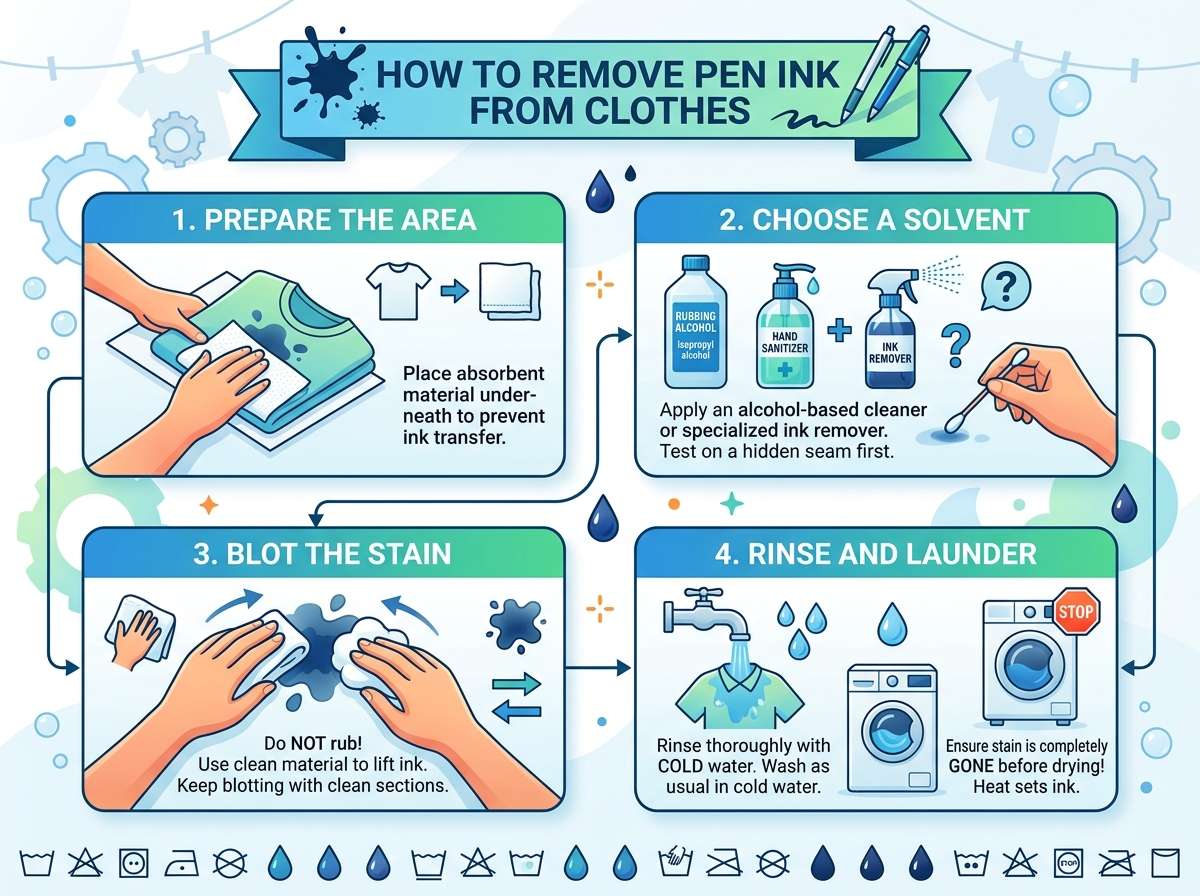
Don’t rub the stain. Don’t try to wipe it off. This pushes the ink deeper into the fabric. Instead, grab a clean white cloth or paper towel. Dab the stain gently from the outside edges toward the center. This prevents the ink from spreading to clean areas.
Step 2: Rinse from the Back
Hold the stained garment under cold running water. Place the stain face down so water runs through it from behind. Cold water works better than hot water for ink stains. Hot water can set the stain permanently.
Let the water run for a minute or two. You should see some ink coming out of the fabric. This is exactly what you want.
Step 3: Choose Your Weapon
Now pick a cleaning method from the options below. The earlier you do this, the simpler the job becomes.
Method One: Rubbing Alcohol
Rubbing alcohol is one of the easiest and most effective ways to remove ballpoint pen stains. You probably have a bottle under your bathroom sink.
What You Need:
- Rubbing alcohol (70% isopropyl alcohol)
- Clean white cloth or paper towels
- A bowl or container
- Cold water
Steps to Follow:
- Pour rubbing alcohol into a bowl. You don’t need much—just enough to soak a cloth.
- Dip your clean cloth into the alcohol. Make sure it’s wet but not dripping.
- Place the stained area over a clean white cloth. This catches the ink as it comes out.
- Dab the stain with the alcohol-soaked cloth. Press down gently and hold for a few seconds.
- Lift the cloth and check the stain. You should see ink transferring to your cloth.
- Keep dabbing with fresh sections of the cloth. Use a new piece each time so you don’t push the ink back.
- Once the stain lightens, rinse the area under cold water.
- If traces remain, repeat the process.
- Wash the garment normally when done.
This method works great on cotton, polyester, and most common fabrics. It’s fast, effective, and safe for colors.
Method Two: Hairspray for Ink Removal
Hairspray seems like an odd choice, but it works. The alcohol content in hairspray helps break down ink. This old home remedy still delivers results.
What You Need:
- Hairspray (choose an affordable brand—you don’t need expensive products)
- Clean white cloth
- Paper towels
- Cold water
Steps to Follow:
- Spray hairspray directly onto the pen ink stain. Apply enough to wet the area.
- Let it sit for 30 seconds. The hairspray needs time to break down the ink.
- Dab the stain with a clean white cloth. You’ll see the ink transfer onto the cloth.
- Keep blotting with fresh cloth sections until the stain fades.
- Rinse the area thoroughly under cold water to remove hairspray residue.
- Wash the garment normally.
Note: Test hairspray on a hidden seam first if you worry about color damage. Some hairsprays contain pigments that might affect certain fabrics.
Method Three: Milk Soak Treatment
This sounds unusual, but milk contains natural enzymes that help break down ink. Whole milk works best, but low-fat milk also works.
What You Need:
- Whole milk or low-fat milk
- A bowl or container
- Clean cloth
- Dish soap
Steps to Follow:
- Fill a bowl with milk. You need enough to soak the stained area.
- Soak the stained part of the garment in milk. Let it sit for 5 to 10 minutes.
- Take the cloth and dab the stain while it’s still in the milk. This helps the milk work into the fabric.
- Remove the garment and rinse under cold water.
- Check if the stain improved. If traces remain, repeat the soak.
- Once the stain is gone, wash with dish soap and water to remove the milk smell.
- Wash normally in the machine.
This method works best on fresh stains. It’s gentle on fabrics and completely safe. The only downside? Your clothes might smell a bit like milk until you wash them.
Method Four: Lemon Juice and Baking Soda Paste
The acidity in lemon juice helps dissolve ink. Baking soda acts as a mild abrasive that lifts the stain. Together they’re a powerful team.
What You Need:
- Fresh lemon juice
- Baking soda
- A small bowl
- Clean cloth
- Cold water
Steps to Follow:
- Pour a few tablespoons of baking soda into a bowl.
- Add lemon juice drop by drop until you form a thick paste. It should feel like peanut butter—thick but spreadable.
- Apply the paste directly to the ink stain.
- Let it sit for 15 to 20 minutes. The longer it sits, the more it works.
- Gently rub the paste into the stain with your fingers or a soft cloth. Use circular motions.
- Rinse thoroughly under cold water until all paste washes away.
- Wash the garment normally.
This paste works well on tough stains that won’t budge. Test it on hidden areas first if you have delicate colors, as the lemon juice can bleach some fabrics.
Method Five: Vinegar Solution
White vinegar is acidic, which helps break down ink molecules. It’s cheap, safe, and you probably have a bottle at home.
What You Need:
- White vinegar
- Clean cloth or sponge
- Cold water
- A spray bottle (optional)
Steps to Follow:
- Apply white vinegar directly to the stain using a cloth or spray bottle.
- Let it sit for 5 minutes. This gives the vinegar time to work.
- Dab the stain with a clean cloth. Press gently but firmly.
- Keep blotting until the stain fades. Replace your cloth when it gets too dirty.
- Rinse the area under cold water multiple times. You want to remove all the vinegar.
- Wash the garment normally.
Vinegar works on most pen ink types. The smell will fade once you wash the garment. If the smell bothers you, add a drop of essential oil to the rinse cycle.
Method Six: Acetone (Nail Polish Remover)
Acetone is strong stuff. It works fast on tough ink stains, but you need to be careful. Test it first on a hidden seam.
What You Need:
- Acetone or nail polish remover
- Clean cloth
- Paper towels
- Cold water
Steps to Follow:
- Test acetone on a hidden part of the garment first. Some fabrics don’t like it.
- Dab acetone onto the stain with a cloth. Use small amounts.
- Let it sit for 1 to 2 minutes. Don’t leave it too long.
- Dab the stain with a clean cloth. The ink should come off quickly.
- Rinse the area well under cold water several times.
- Wash the garment immediately.
Acetone works great on ballpoint and gel pen stains. It’s not the best choice for delicate fabrics or dark colors. Use it only when other methods fail.
Method Seven: Permanent Marker Removal
Permanent ink stains need a different approach. These markers use stronger ink that bonds tighter to fabric.
What You Need:
- Rubbing alcohol or hairspray
- Clean cloth
- Paper towels
- Permanent marker in a matching color (optional)
- Cold water
Steps to Follow:
- Try rubbing alcohol first since it’s the gentlest option. Follow the steps in Method One above.
- If alcohol doesn’t work, move to hairspray. Use Method Two.
- For stubborn permanent marker stains, you can try an unusual trick: color over the stain with a permanent marker in a matching color. This sounds odd, but the solvent in the new marker can help lift the old stain.
- Work the colored area with a cloth soaked in alcohol.
- Rinse thoroughly under cold water.
- Wash normally.
Permanent markers are tough customers. You might need to try multiple methods. Be patient and don’t give up.
Method Eight: Hydrogen Peroxide Treatment
Hydrogen peroxide works well on light-colored fabrics. It’s a mild bleach, so avoid it on dark clothes.
What You Need:
- 3% hydrogen peroxide
- Clean cloth
- Cold water
- A towel
Steps to Follow:
- Apply hydrogen peroxide directly to the stain.
- Let it sit for 10 minutes. You might see it bubble slightly—that’s the peroxide working.
- Dab the stain with a clean cloth. The ink should lift onto the cloth.
- Repeat until the stain fades.
- Rinse well under cold water.
- Wash normally.
Only use this method on whites or light colors. The peroxide can damage dark dyes.
What Not to Do
Now let’s talk about mistakes to avoid. These errors make ink stains worse, not better.
Don’t Use Hot Water: Hot water sets ink stains permanently. Always use cold water for rinsing. This is the most important rule.
Don’t Rub Hard: Aggressive rubbing pushes ink deeper into fabric fibers. Always dab gently instead.
Don’t Use the Dryer: Heat from the dryer makes stains permanent. Air dry the garment after treatment. Only use heat once you’re sure the stain is gone.
Don’t Mix Chemicals: Never combine vinegar with bleach or hydrogen peroxide with vinegar. These mixtures create harmful fumes.
Don’t Wait Too Long: Act on stains immediately. The longer ink sits, the harder it becomes to remove.
Don’t Assume It’s Gone: Just because a stain looks better doesn’t mean it’s completely gone. Wash the garment and air dry it. If the stain reappears, treat it again before drying.
Removing Stains from Different Fabrics
Different materials need different care levels. Here’s what works best for each.
Cotton Clothes: Cotton is tough and forgiving. Use any method above. Rubbing alcohol works fastest.
Polyester Blends: These fabrics are durable. Most methods work well. Test acetone first since some polyester doesn’t like it.
Delicate Fabrics (Silk, Satin, Lace): Use gentle methods only. Try milk soak or diluted vinegar first. Avoid acetone and hydrogen peroxide.
Wool: Be very careful with wool. Use cold water and mild methods. Milk soak is your safest bet.
Jeans and Heavy Denim: Denim can handle tough treatment. Rubbing alcohol and hairspray both work well.
Synthetics: Most synthetic fabrics tolerate all methods. Test on a hidden seam first if you’re unsure.
Treating Old and Set-In Stains
Sometimes you discover an ink stain long after it happened. These old stains need extra work.
Soak Method: Fill a basin with cold water and your chosen treatment (vinegar, milk, or alcohol). Soak the stained area for 2 to 4 hours. Dab the stain every 30 minutes. Rinse and wash normally.
Paste Method: Make a thick paste with your treatment method (like the baking soda and lemon paste). Apply it thick. Cover the stain with plastic wrap. Let it sit overnight. Rinse and wash.
Multiple Treatments: Sometimes old stains need several different methods. Try alcohol first. If that doesn’t work, try vinegar next. Keep trying until the stain fades.
Professional Help: If you’ve tried everything and the stain remains, take the garment to a professional dry cleaner. They have industrial-strength treatments.
Preventing Ink Stains in the Future
Prevention is easier than removal. Try these simple steps.
Keep Pens Capped: Always put caps back on pens immediately after use.
Store Pens Properly: Keep pens in a cup or container where they won’t leak onto clothes.
Check Pockets: Empty pockets before washing clothes. A lost pen can ruin an entire load.
Inspect Before Washing: Look for any stains before putting clothes in the washer.
Separate New Pens: Don’t put new pens in the same pocket as clothes you care about.
Use Pen Covers: Pen covers prevent accidental leaks.
Common Questions Answered
Can I remove old pen ink stains? Yes, but they’re harder to remove. You might need multiple treatments or professional help.
Does the type of ink matter? Yes. Ballpoint ink is easiest. Gel pens are harder. Permanent markers are the toughest.
Will these methods work on all fabrics? Most methods work on most fabrics. Always test on a hidden seam first if you’re worried.
What if I already washed and dried the stain? The stain may have set, but you can still try treating it. Use the soak method for best results.
Is rubbing alcohol safe for colors? Yes, rubbing alcohol is safe for most dyed fabrics. It won’t cause fading like some bleach products.
How long does treatment take? Fresh stains take 15 to 30 minutes. Old stains might need several hours or overnight soaking.
Can I use baby wipes to remove ink? Some baby wipes contain alcohol and work okay. Regular baby wipes alone won’t remove ink stains.
What should I do if the stain gets worse? Stop immediately. Rinse with cold water. Try a different method. Some methods work better on different ink types.
Final Tips for Success
Follow these guidelines to get the best results possible.
Start Gentle: Always try the gentlest method first. Move to stronger treatments only if needed.
Be Patient: Let treatments sit for the recommended time. Rushing reduces results.
Work from Outside In: Always dab from the stain edges toward the center. This prevents spreading.
Use Clean Cloth Sections: Always use a fresh part of your cloth. Dirty cloth pushes ink back onto fabric.
Check Progress: Stop every few minutes and check how the stain looks. You’ll know when it’s time to switch methods.
Rinse Thoroughly: After any treatment, rinse multiple times with cold water. Leftover treatment chemicals can damage fabric.
Air Dry First: Never put the garment in the dryer until you’re 100% sure the stain is gone.
Conclusion
Ink stains on your clothes don’t have to mean goodbye to that shirt or pants. You have plenty of options to remove them. Most treatments use things you already have at home. Even if you need to buy something, the cost is minimal compared to replacing the garment.
The key is speed. Act immediately when you spot an ink stain. Cold water, gentle dabbing, and the right treatment method will get your clothes looking clean again. Start with the easiest method. If that doesn’t work, try another one. You’ll find something that works for your stain.
Keep these methods handy. Share them with friends and family. Next time someone gets a pen stain, you’ll know exactly what to do. Your favorite clothes deserve a second chance, and now you have all the tools to give them one.