How to Clean Your Pandora Bracelet?
Your Pandora bracelet is more than just a piece of jewelry. It’s a collection of memories, special moments, and beautiful charms that mean something to you. Over time, these treasured bracelets can get dirty, dull, and tired-looking. The good news? You can bring them back to life with simple cleaning methods that anyone can do at home.
This guide walks you through everything you need to know about cleaning Pandora bracelets. You’ll learn what causes the damage, which methods work best, and how to keep your bracelet shining for years to come.
Why Does Your Pandora Bracelet Need Cleaning?
Your bracelet sits on your wrist every day. It touches soap, lotion, sweat, and dirt. Over time, your Pandora bracelet can lose its sparkle and shine. The silver tarnishes. The gems look dull. The clasps get sticky and hard to open.
Cleaning your bracelet isn’t just about making it look pretty. Regular cleaning also helps you spot any loose charms or broken parts before they cause bigger problems. When you clean your bracelet, you get to inspect each charm and make sure everything is secure.
What You’ll Need Before You Start
The beautiful thing about cleaning Pandora bracelets at home is that you probably already have most of what you need. Here’s a simple list of supplies:
Basic cleaning supplies:
- Warm water
- Gentle dish soap
- Soft cloth or microfiber cloth
- Soft-bristled toothbrush
- Small bowl
- Towels for drying
Optional items for tough tarnish:
- White vinegar
- Baking soda
- Aluminum foil
- Polishing cloth designed for silver
- Soft brush specifically made for jewelry
You don’t need to buy expensive cleaning kits. Your regular household items work just fine. The key is using soft materials that won’t scratch or damage your bracelet.
The Simple Soap and Water Method
This is the easiest way to clean your Pandora bracelet, and it works great for regular maintenance. You can do this every few weeks to keep your bracelet looking fresh.
Here’s what to do:
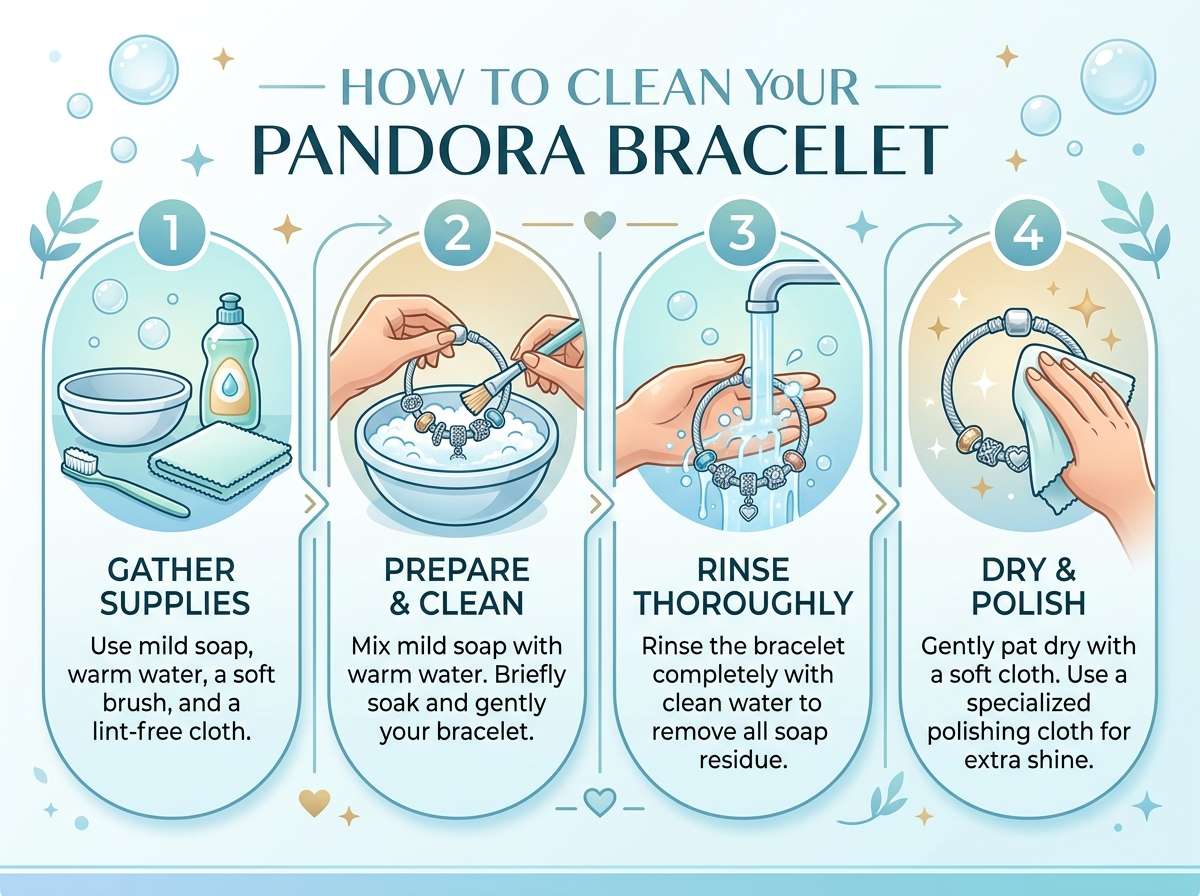
Fill a small bowl with warm water. Make sure the water is warm, not hot. Hot water can damage some charm materials like enamel or certain gemstones. Add just a tiny squirt of gentle dish soap to the water. You want it just soapy enough to clean, not so soapy that you create a ton of bubbles.
Drop your bracelet into the soapy water. Let it soak for about five to ten minutes. This gives the soap time to break down dirt and oils that are stuck to your bracelet.
Take a soft-bristled toothbrush and gently scrub each charm. Pay special attention to the tiny crevices where dirt likes to hide. For the main band of your bracelet, use gentle circular motions with the brush. Don’t scrub hard or fast. You want to be thorough but gentle.
Pay close attention to the space where charms connect to the bracelet band. This spot tends to collect more dirt and debris. A soft toothbrush reaches these spots perfectly.
Rinse your bracelet under clean running water. Hold it under the water and gently rub it with your fingers as you rinse. Make sure you rinse away all the soap. Any soap left behind can make your bracelet look cloudy.
Pat your bracelet dry with a soft towel. Don’t rub it. Just gently press the towel against your bracelet to absorb the water. Then lay it on a clean, dry cloth and let it air dry completely before wearing it again.
The Vinegar and Baking Soda Method
When your bracelet has built-up tarnish or looks really dull, the soap and water method might not be enough. That’s when vinegar and baking soda come in handy. This method is stronger but still gentle on your jewelry.
How to use this method:
Create a paste by mixing baking soda with a little white vinegar. You want it thick enough to stick to your bracelet but loose enough to spread easily. This mixture might bubble up a bit, which is totally normal.
Use your soft-bristled toothbrush to apply this paste to your bracelet. Focus on the areas that look most tarnished or dull. Work the paste into the crevices and between charms.
Let the paste sit for about five to ten minutes. This gives the baking soda and vinegar time to work on the tarnish. You might see some bubbling or hear a slight fizzing sound. This is the chemical reaction that helps remove tarnish, and it’s exactly what you want.
Rinse your bracelet thoroughly under clean running water. Use your fingers to gently rub away all the paste. You want to remove every bit of the baking soda and vinegar mixture.
Dry your bracelet completely with a soft cloth. Make sure no moisture remains, as any leftover water can cause new tarnish to form.
The Aluminum Foil Method
This method might sound strange, but it really works. It’s especially good for getting rid of heavy tarnish without any hard scrubbing.
Here’s the process:
Line a small bowl with aluminum foil. Put the shiny side facing up inside the bowl. This matters because the foil works differently depending on which side faces your bracelet.
Fill the bowl with hot water. Not boiling water, but hot enough that you can barely hold your finger in it. Add about a tablespoon of baking soda to the water and stir it around.
Place your bracelet on the aluminum foil in the hot water. Make sure your bracelet makes contact with the foil. The chemical reaction between the silver, the foil, and the baking soda removes tarnish naturally.
Let your bracelet soak for five to fifteen minutes. You might see the water turn dark. This is the tarnish leaving your bracelet and going into the water. It’s a good sign that the method is working.
Remove your bracelet from the water and rinse it well under cool running water. Pat it dry with a soft cloth. Your bracelet should look noticeably shinier and brighter.
This method is great because it doesn’t require any scrubbing. The chemical reaction does most of the work for you.
Gentle Care for Special Charms
Not all Pandora charms are made from the same materials. Some have gemstones. Others have enamel details. A few have leather or fabric elements. Each type needs slightly different care.
Silver and metal charms: These are the easiest to clean. Use any of the methods mentioned above. The stronger methods with vinegar or foil work especially well on pure silver charms.
Gemstone charms: Charms with stones like cubic zirconia or other gems need gentler care. Stick to the soap and water method. Avoid the vinegar or foil methods, as the stronger chemicals might damage the stone setting or make gems look cloudy.
Enamel charms: These colorful charms with painted designs should only be cleaned with the soap and water method. Never use harsh chemicals or strong scrubbing. The enamel coating can crack or peel if you’re too rough.
Leather charms: If you have charms with leather details, avoid soaking them in water. Instead, use a barely damp cloth with a tiny drop of soap to clean them. Dry them immediately afterward.
Mother-of-pearl and pearl charms: These delicate materials need the gentlest touch. Use only the soap and water method, and avoid any scrubbing. Just let them soak and rinse gently.
When you’re not sure what your charm is made from, assume it’s delicate. Use the simplest, gentlest method. It’s better to clean a charm more often with a gentle method than to damage it with a harsh one.
How to Clean the Bracelet Band and Clasp
The band of your bracelet is just as important as the charms. Your bracelet spends all day resting on your skin, collecting sweat, lotion, and dirt. The clasp especially can get sticky and hard to use.
Cleaning the band:
The band needs the same care as your charms. Use the soap and water method regularly. Pay special attention to the inside of the band, where it touches your skin. This spot collects the most dirt and buildup.
For tarnish on the band, use the vinegar and baking soda method or the aluminum foil method. The band is usually just silver, so these stronger methods are safe to use.
Cleaning the clasp:
The clasp is the hardest-working part of your bracelet. It opens and closes hundreds of times. Over time, it can get sticky, hard to open, or dirty inside.
Soak your bracelet with the clasp area in soapy water for longer than usual. Give the clasp time to soften up and let dirt work loose. Take your soft toothbrush and gently brush the clasp, focusing on the areas where it opens and closes.
Use a toothpick or very thin brush to clean inside the clasp mechanism. Be careful here. You want to remove dirt without forcing anything or damaging the delicate parts inside.
If your clasp still feels sticky after cleaning, don’t force it. Forcing a sticky clasp can break it permanently. Instead, soak it again in soapy water and let it sit for a while longer.
Drying and Storage Matter
How you dry and store your bracelet affects how often it needs cleaning. Proper drying prevents water spots and new tarnish from forming.
Best drying practices:
Never leave your bracelet wet. Water left on silver creates new tarnish quickly. Always dry your bracelet completely after cleaning.
Use a lint-free cloth. Microfiber cloths work great. Regular towels can leave lint behind that makes your bracelet look dull.
Dry every part, including between charms and inside the band. These hidden spots are easy to forget, but water trapped there creates tarnish you can’t see until it’s too late.
Let your bracelet air dry completely after towel drying. Lay it on a clean cloth in a dry spot for at least an hour before wearing it.
Storage tips:
Store your bracelet in a cool, dry place. Moisture in the air causes tarnish. A jewelry box with a drawer is perfect. Avoid keeping your bracelet in the bathroom, where steam and humidity are constant problems.
Keep your bracelet away from direct sunlight. Sunlight can fade enamel colors on your charms over time.
Store each bracelet separately if you have more than one. Bracelets tangled together can scratch each other and are harder to clean.
Many people use anti-tarnish pouches inside their jewelry storage. These special pouches have chemicals that slow down tarnish formation. They’re inexpensive and really work.
Common Mistakes to Avoid
Even the best intentions can backfire if you make these common mistakes when cleaning your Pandora bracelet.
Don’t use boiling water. Hot water is okay, but boiling water can damage enamel charms and certain gemstones. Stick with water that’s comfortably warm to the touch.
Don’t scrub hard. Gentle, circular motions work best. Hard scrubbing can scratch your bracelet and damage the surface of charms. Let the cleaning solution do the work. You just help it along.
Don’t use harsh chemicals. Stay away from bleach, acetone, or commercial silver dip. These are too strong and can damage your bracelet. Stick with natural options like vinegar, baking soda, and dish soap.
Don’t soak special charms too long. Gemstones and enamel charms should soak for no more than a few minutes. Extended soaking can damage the glue holding gems in place or cause enamel to crack.
Don’t mix cleaning methods on one bracelet. If you use the foil method, rinse very thoroughly before trying another method. Leftover chemicals from one method can react badly with another.
Don’t forget the inside of the band. The inside of your bracelet band is out of sight but not out of mind. It still collects dirt and needs regular cleaning.
Don’t store your bracelet while it’s wet. Even a little leftover moisture can cause tarnish to form quickly while your bracelet is in storage.
How Often Should You Clean Your Bracelet?
How often you clean your Pandora bracelet depends on how much you wear it and how much it gets exposed to water, sweat, and other elements.
If you wear your bracelet daily: Use the soap and water method every two weeks. Do a deeper clean with vinegar or foil once a month.
If you wear your bracelet occasionally: Clean it with soap and water once a month. Do a deeper clean every three months.
If you wear your bracelet rarely: Clean it before you wear it, especially if it’s been in storage for a while.
Pay attention to how your bracelet looks. If it starts looking dull or tarnished, clean it right away. Don’t wait for a scheduled cleaning day. Your bracelet will tell you when it needs attention.
When Should You See a Professional?
Sometimes your bracelet needs professional help. You can do a lot at home, but some jobs belong in a jeweler’s hands.
Visit a jeweler if:
- Your clasp is broken or stuck and won’t move no matter what you try
- A charm is loose and you can’t tighten it yourself
- A stone has fallen out of a charm
- Your bracelet band has bent or twisted out of shape
- You notice cracks or damage to enamel that won’t come clean
- You’re not sure what material a charm is made from and fear damaging it
- Your bracelet has been stored improperly and developed serious tarnish deep in the crevices
Pandora stores often offer cleaning and repair services. Some jewelers offer these services too. It costs money, but it’s worth it to save a bracelet you love.
Tips for Keeping Your Bracelet Clean Longer
The best cleaning is the cleaning you don’t have to do. Here are ways to keep your bracelet clean between cleanings.
Remove your bracelet before certain activities. Take it off before showering, swimming, or exercising. Water and sweat speed up tarnish formation. Also remove it before washing dishes, doing yard work, or anything that exposes your bracelet to dirt or chemicals.
Wipe your bracelet occasionally. Keep a soft cloth near where you usually take off your bracelet. Wipe it down once a day. This removes oils and dust before they build up.
Avoid lotions and perfumes on your wrist. These products leave residue on your bracelet. Apply them to other parts of your body instead. If you do put lotion on your wrist, let it dry completely before putting your bracelet back on.
Avoid wearing your bracelet in chlorinated pools. Chlorine damages silver and can damage enamel charms. Salt water is also bad for your bracelet. If you’re going to the beach or pool, leave your bracelet at home.
Keep your bracelet in a protected spot when you’re not wearing it. Don’t throw it on your nightstand or dresser. Store it in a drawer or box where it’s protected from dust and humidity.
Consider an anti-tarnish pouch. These pouches are cheap and really do slow down tarnish. They’re perfect for bracelets you don’t wear every day.
Troubleshooting Specific Problems
Different issues need different solutions. Here’s help for common Pandora bracelet problems.
My bracelet has black marks that won’t come off:
Black tarnish needs a strong cleaning method. Try the aluminum foil method first. If that doesn’t work, try the vinegar and baking soda method. Let the paste sit a little longer. Black tarnish can be stubborn. You might need to repeat the process a few times.
My clasp is impossible to open:
Your clasp is probably stuck from dirt buildup or corrosion. Soak the bracelet for a long time in soapy water. Try opening it gently while it’s still wet. Never force it. If it won’t move after soaking, see a jeweler.
My enamel charm looks cloudy after cleaning:
You might have used water that was too hot or left soap residue on the charm. Next time, use cooler water and rinse much more thoroughly. To fix cloudy enamel, soak the charm in clean water for a few minutes, then dry it well.
My gems look dull and lifeless:
Gems get dull when they’re covered in a film of soap residue or minerals from water. Use distilled water for your final rinse instead of tap water. Distilled water has no minerals that leave spots.
My bracelet smells bad:
Moisture trapped inside can cause odors. Soak your bracelet in fresh soapy water for a few minutes. Pay special attention to the inside of the band. Dry it completely and store it in a dry place. You can place a small packet of unscented baking soda in your storage box to absorb odors.
My bracelet has scratches:
Light scratches from daily wear are normal. You can’t remove them yourself without special tools. If you have many scratches, a jeweler can polish your bracelet professionally to make it look new again.
The Final Shine: Your Bracelet Deserves It
Your Pandora bracelet represents memories and moments you want to keep forever. It’s worth taking a few minutes to keep it clean and looking beautiful. You don’t need expensive products or professional help for regular maintenance.
With the simple methods in this guide, you can keep your bracelet shining for years. Start with the basic soap and water method. When your bracelet needs a deeper clean, try the vinegar and baking soda or aluminum foil methods. Take care of it, store it properly, and remove it during activities that expose it to harsh conditions.
A clean bracelet looks like new again. You’ll feel happy wearing it. The charms will sparkle. The band will shine. Best of all, you can do it all yourself at home with supplies you already have.
Remember, gentle care is always better than aggressive cleaning. If you ever feel unsure about a cleaning method, it’s better to be conservative. Use the simplest method first. You can always try something stronger next time if needed.
Start today. Gather your supplies. Give your bracelet some love and attention. The effort you put in now means your bracelet will stay beautiful and last for many years to come. Your favorite piece of jewelry is worth it.
Quick Reference Cleaning Chart
Regular maintenance (every two weeks):
- Soap and warm water
- Soft cloth and soft toothbrush
- Takes about 10 minutes
Monthly deep clean:
- Vinegar and baking soda paste, OR
- Aluminum foil method
- Takes about 15-20 minutes
Quarterly deep clean for heavy tarnish:
- Aluminum foil method (best for tarnish)
- Followed by soap and water rinse
- Takes about 30 minutes
Before wearing after storage:
- Quick soap and water wash
- Complete air dry
- Takes about 5 minutes
Remember these steps, and your Pandora bracelet will stay as beautiful as the day you got it. Happy cleaning!
Mary is a fashion enthusiast and lifestyle writer who loves discovering stylish clothing, accessories, and everyday fashion essentials. She enjoys researching the latest trends, reviewing popular products, and sharing practical style tips to help readers dress with confidence. Through FashionSolve.com, Mary provides honest recommendations, fashion guides, and inspiration for building a wardrobe that is both stylish and affordable.