How To Get Spray Tan Off Hands?
So you just got a fresh spray tan and your body looks amazing. But then you look down at your hands and… yikes. They are darker than the rest of you, stained in weird patches, and it looks nothing like a natural glow. Sound familiar? You are not alone. This is one of the most common problems people run into after a spray tan session.
The good news is that this is totally fixable. You don’t need to panic or hide your hands in your pockets for the next week. There are plenty of simple, safe, and cheap ways to fade that orange or brown tint and get your skin back to normal. In this guide, we will walk through why this happens in the first place, and then go step by step through the best methods to remove spray tan stains from your hands, palms, and even under your nails.
Let’s get into it.
Why Do Hands Get So Stained From Spray Tan?
Before we jump into the fixes, it helps to know why hands are such a problem area. Spray tan works by using an ingredient called DHA, which reacts with the dead skin cells on the surface of your body. This reaction is what creates that bronzed color.
The thing is, your hands have thicker skin than most other parts of your body. Your palms, knuckles, and the skin between your fingers soak up more of the tanning solution than smoother areas like your arms or legs. This means the color builds up faster and darker in these spots. On top of that, your hands are the tool you use to apply or blend the tan, so they naturally come into direct contact with more product than anywhere else.
Cuticles, nails, and creases in your knuckles also tend to trap extra solution, which is why you often see dark rings around your nails or deep color settled into the folds of your skin. Once you understand this, it makes sense why hands need a little extra care and attention after tanning.
The First Rule: Act Fast
Timing matters a lot here. If you catch the stain early, before it fully develops, it will be much easier to remove. DHA usually takes several hours to fully develop and darken on the skin, so if you notice your hands are getting too dark right after applying a tan, washing them off quickly can stop the color from setting in too deep.
But if it’s already been a day or two and the color has locked in, don’t stress. The methods below still work, they might just take a bit more effort and a couple of tries.
Method One: Baking Soda and Water Scrub
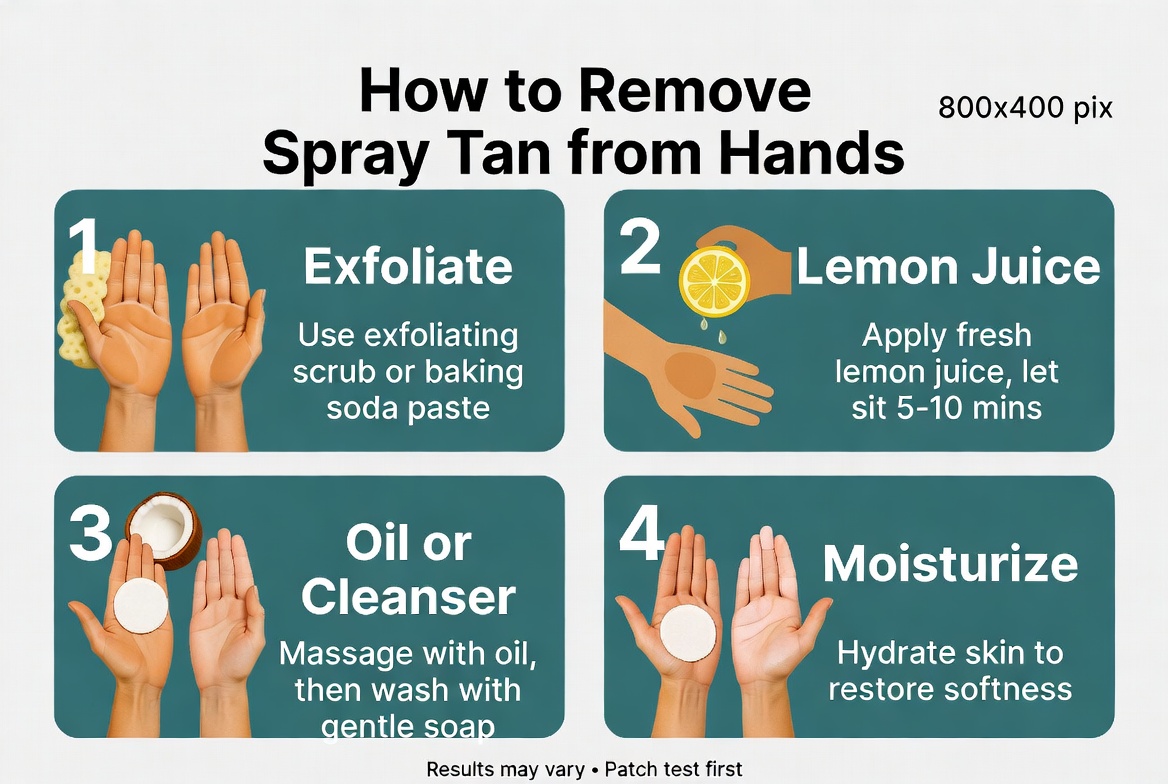
This is probably the most popular home remedy, and for good reason. Baking soda is a gentle exfoliant that helps buff away the top layer of stained skin without being too harsh.
Here’s how to use it:
- Mix a spoonful of baking soda with a small amount of warm water until it forms a thick paste.
- Rub the paste onto your hands in small circles, paying extra attention to your knuckles, palms, and the skin around your nails.
- Let it sit for about two minutes so it has time to work.
- Rinse with warm water and pat your hands dry.
- Follow up with a good moisturizer since baking soda can dry out your skin.
You can repeat this once a day until the stain fades. It won’t remove everything in one go, but you’ll notice a difference pretty quickly.
Method Two: Lemon Juice
Lemon juice has natural acids that break down the tanning residue sitting on your skin. It’s a classic trick that a lot of tanning studios actually recommend to their clients.
To try this method:
- Cut a lemon in half.
- Rub the cut side directly onto your stained hands, focusing on the darker spots.
- Let the juice sit for five to ten minutes.
- Rinse well with warm water.
If your skin feels a bit sensitive afterward, that’s normal since lemon juice is acidic. Just make sure to moisturize right after. Some people like to mix lemon juice with a bit of sugar to create a scrub that exfoliates and lightens the color at the same time.
Method Three: Whitening Toothpaste
This one might sound strange, but it works surprisingly well. Toothpaste, especially the whitening kind, has mild bleaching agents and gritty texture that helps lift stains from skin, similar to how it lifts stains from teeth.
Steps to follow:
- Squeeze a small amount of white toothpaste onto your hands.
- Rub it into the stained areas using gentle circular motions.
- Leave it on for a few minutes.
- Wash off completely with warm water.
Avoid gel toothpaste since it usually doesn’t have the same lightening effect. Stick with a basic white paste for the best results.
Method Four: Nail Polish Remover for Nail Stains
If the tan has left dark rings around your nails or under them, regular soap and water won’t cut it. Nail polish remover, especially one with acetone, can help break down that stubborn staining.
Here’s what to do:
- Soak a cotton pad with a small amount of nail polish remover.
- Gently rub it around your nail beds and cuticles.
- Use a soft nail brush to clean underneath your nails if needed.
- Wash your hands afterward to remove any leftover remover residue.
Be careful not to overdo this method, since acetone can dry out your nails and the surrounding skin if used too often.
Method Five: Exfoliating Gloves or a Body Scrub
If you have an exfoliating glove or a rough washcloth lying around, now is the time to use it. Physical exfoliation is one of the most reliable ways to remove dead skin cells along with the tanning stain sitting on top of them.
How to do it:
- Wet your hands with warm water.
- Put on the exfoliating glove or apply a body scrub.
- Rub your hands together in circular motions for about a minute, focusing on the darkest spots.
- Rinse and moisturize afterward.
This method pairs really well with a warm shower since steam helps open up your pores and softens the skin, making the stain easier to buff away.
Method Six: Hydrogen Peroxide
Hydrogen peroxide is another option that works as a mild bleaching agent. It’s strong, so use it carefully and only on small stained areas rather than your entire hand.
Steps:
- Dab a small amount of hydrogen peroxide onto a cotton ball.
- Apply it directly to the stained spots.
- Leave it on for no more than a minute or two.
- Rinse thoroughly with water.
Because this can be harsh on skin, it’s best saved as a backup option if the gentler methods above aren’t giving you the results you want fast enough.
Method Seven: Olive Oil or Coconut Oil
If your skin feels irritated from trying a few of the scrub methods, oils are a gentle way to keep working on the stain without causing more dryness. Oils help loosen the bond between the tanning product and your skin.
To use this method:
- Warm a small amount of olive oil or coconut oil between your palms.
- Massage it into your hands, really working it into the stained areas.
- Let it sit for around ten minutes.
- Wipe off with a warm, damp cloth.
This won’t remove dark color as fast as the scrubs, but it’s a great gentle option to add into your daily routine while your skin naturally sheds the stained layer.
Method Eight: Makeup Remover Wipes
Makeup remover wipes, especially the kind made for waterproof mascara, are formulated to break down stubborn pigments. Since spray tan stains behave a lot like a topical pigment sitting on your skin, these wipes can help lift the color.
Simply wipe your hands with one of these cloths in circular motions, focusing on knuckles and palms. Rinse afterward and moisturize.
What To Avoid Doing
While trying to fix stained hands, it’s easy to reach for harsh solutions out of frustration. Here are a few things you should steer clear of:
- Don’t scrub too hard or too often, since this can irritate your skin and cause redness or even small cuts.
- Avoid bleach or other extremely harsh chemicals not meant for skin use.
- Don’t skip moisturizer, since dry skin actually holds onto tanning color longer and can look patchy.
- Try not to pick at your skin or peel it, since this can lead to uneven color and irritation.
How To Prevent Stained Hands Next Time
Now that you know how to fix the problem, let’s talk about stopping it from happening again. A few small changes to your routine can save you a lot of hassle later.
Wear gloves when applying self tanner. This is probably the single best tip out there. Tanning gloves are cheap, and they create a barrier between the product and your skin so your hands never come into direct contact with the solution.
Wash your hands right after application. Even with gloves, some product can end up on your skin. Washing with soap right after you finish applying the tan helps remove any excess before it has a chance to develop.
Use a barrier cream on your knuckles and nails. A thin layer of lotion or cuticle oil on these spots before tanning stops the solution from soaking in too deeply.
Blend carefully around the wrists. A lot of staining happens because people forget to blend the tan smoothly where their hands meet their arms. Take a few extra seconds here to avoid a harsh line.
Ask your tanning technician for tips. If you go to a salon, technicians see this issue all the time and usually have their own tricks for keeping hands stain free.
How Long Does It Take For Stains To Fully Fade?
Even with all these tricks, it’s good to set realistic expectations. Spray tan stains on hands typically fade within a few days to about a week as your skin naturally sheds its outer layer. Using the scrub methods above can speed this process up quite a bit, sometimes cutting the fading time in half.
If your hands still show some color after trying several of these methods, don’t worry. Just keep up with gentle exfoliation and moisturizing, and it will continue to fade with each passing day.
Quick Recap
Getting spray tan off your hands doesn’t have to be complicated. Here’s a simple rundown of your best options:
- Baking soda paste for gentle daily exfoliation
- Lemon juice to break down the tanning residue
- Whitening toothpaste for a quick fix
- Nail polish remover for stubborn nail stains
- Exfoliating gloves or scrubs for physical removal
- Hydrogen peroxide for tough spots, used sparingly
- Oils to soften skin and loosen stains gently
- Makeup remover wipes for a fast touch up
Try a couple of these methods and see which one works best for your skin type. Some people find lemon juice does the trick right away, while others need to combine a scrub with regular moisturizing over a few days.
Frequently Asked Questions
Does hand sanitizer help remove spray tan stains?
Yes, a little bit. Hand sanitizer contains alcohol, which can break down some of the surface pigment sitting on your skin. It won’t work as well as the methods above, but it can be a handy quick fix if you’re out and about and need a small touch up before a meeting or an event.
Will dish soap work better than regular hand soap?
It actually can. Dish soap is made to cut through grease and grime, so it tends to strip away tanning residue a bit faster than gentle hand soaps. Just be aware that dish soap can be drying, so follow up with lotion after using it a few times.
Is it normal for palms to turn orange instead of brown?
Yes, this is very common. Palms have thicker skin with more dead cells on the surface, so they often react differently to DHA than the rest of your body. The orange tint usually fades faster than you’d think once you start exfoliating.
Can I use a pumice stone on my hands?
You can, though it’s best used mainly on rougher areas like knuckles rather than your entire hand, since the skin on your palms can be sensitive. A pumice stone works in a similar way to exfoliating gloves, buffing away the top layer of stained skin.
How often should I exfoliate while trying to fade the stain?
Once a day is a good rule to follow. Exfoliating more than that can leave your skin red, sore, or overly dry, which actually makes the stain look worse instead of better. Patience combined with consistent gentle care wins here.
Does swimming pool water help lighten spray tan?
Chlorine can speed up fading, so if you happen to go for a swim, you might notice your hands look a bit lighter afterward. That said, chlorine is also tough on skin, so don’t rely on this as your main method.
Are there any products made specifically for removing tanning stains?
Yes, there are tan removal mitts and specialty tan eraser products sold at beauty stores and online. These are formulated with mild acids and exfoliating textures designed exactly for this purpose, and they can be a solid option if home remedies aren’t cutting it fast enough for you.
A Few Extra Tips For Sensitive Skin
If your skin tends to react easily to new products, take it slow with these remedies. Start with the gentlest option, like oil or a light baking soda paste, before moving on to anything stronger like lemon juice or hydrogen peroxide. Always rinse thoroughly and moisturize right after any of these treatments, since keeping your skin hydrated helps it heal and shed the stained layer naturally.
It also helps to do a small patch test first, especially with lemon juice or hydrogen peroxide, just to make sure your skin doesn’t react badly. Apply a tiny bit to the inside of your wrist, wait a few minutes, and check for any redness or irritation before using it on your hands more broadly.
Another thing worth mentioning is diet and hydration. While this won’t remove existing stains, well hydrated skin sheds its outer layer more evenly, which can help prevent blotchy or patchy fading down the road. Drinking enough water and using a daily moisturizer keeps your skin in good shape overall, making future touch ups easier to manage.
Final Thoughts
Stained hands after a spray tan are annoying, but they are also completely normal and very common. It happens to loads of people, even those who tan regularly. The trick is knowing which household items can help lift that color without damaging your skin.
Keep a few of these remedies in your back pocket for next time, and consider adding gloves or a barrier cream into your tanning routine going forward. With a little patience and the right approach, your hands will match the rest of your glow in no time, and you’ll be ready to show off that tan with total confidence.
Mary is a fashion enthusiast and lifestyle writer who loves discovering stylish clothing, accessories, and everyday fashion essentials. She enjoys researching the latest trends, reviewing popular products, and sharing practical style tips to help readers dress with confidence. Through FashionSolve.com, Mary provides honest recommendations, fashion guides, and inspiration for building a wardrobe that is both stylish and affordable.