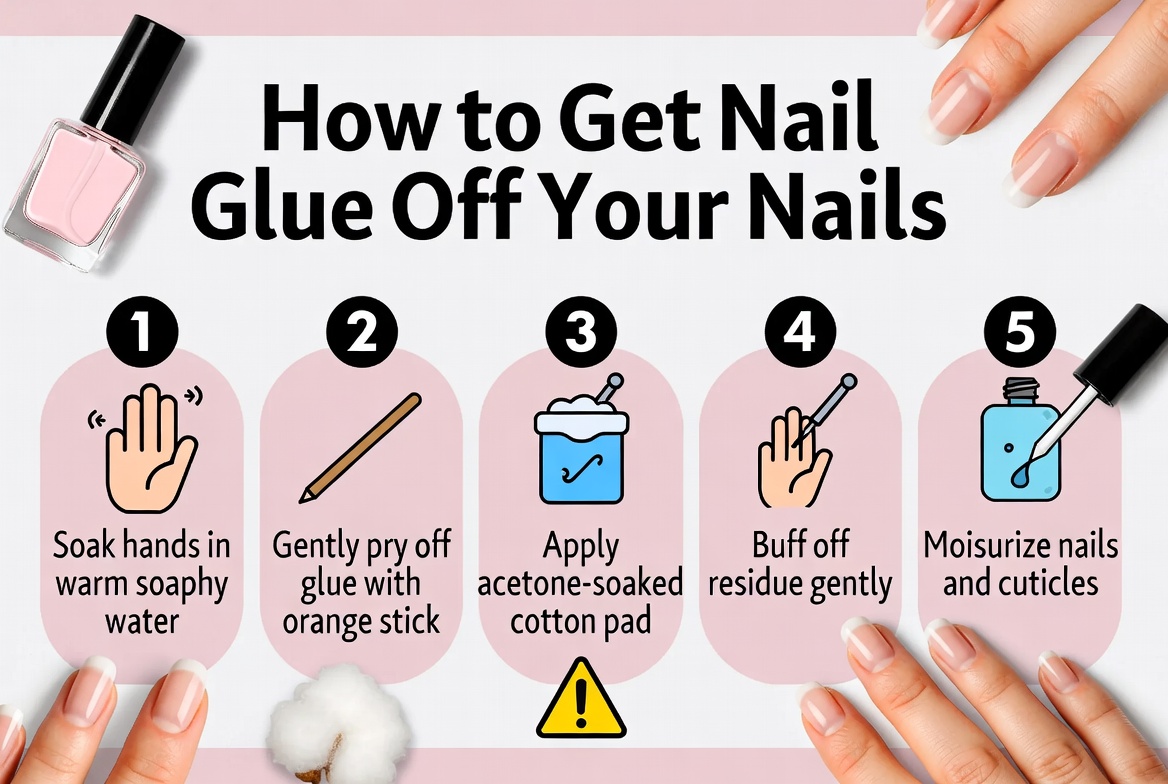
How to Get Nail Glue Off Your Nails?
Getting nail glue stuck on your nails can feel like a nightmare. Your fingers feel stiff. The glue hardens. You start to panic. But here’s the truth: removing nail glue is totally doable. You don’t need fancy tools or expensive products. Just follow the right steps, and you’ll have clean nails again in no time.
This guide will walk you through every method you need to know. Some work faster than others. Some cost money. Some use things you probably have at home. By the end, you’ll be an expert at getting adhesive off your nails safely.
Why Nail Glue Gets Stuck (And Why It’s Such a Pain)
Nail glue is designed to bond fast. That’s its whole job. The glue sticks to your nail surface and hardens within seconds. The stronger the glue, the tougher it is to remove.
Most nail glues contain cyanoacrylate as their main ingredient. This stuff bonds instantly to keratin, which is what your nails are made from. That’s why regular soap and water won’t help. You need to break the bond between the glue and your nail surface.
The good news? The bond isn’t unbreakable. You just need the right approach.
Method 1: Acetone Soaking (The Most Effective Way)
Acetone is your best friend when it comes to removing nail glue. It breaks down the adhesive faster than almost anything else.
What you need:
- Acetone or acetone-based nail polish remover
- A bowl or cup
- Warm water
- A nail file or cuticle pusher
Steps to follow:
First, pour acetone into your bowl. You don’t need much. Just enough to soak your fingertips. If you only have nail polish remover, check the label. Make sure it contains acetone. Some removers use different ingredients and won’t work as well.
Soak your fingertips in the acetone for five to ten minutes. The glue will start to soften. You might feel the adhesive loosening. This is a good sign.
After soaking, gently rub the glued area with your fingers or a soft cloth. The glue should start rolling off in little balls. Don’t scratch or pick too hard. You’re not trying to attack your nails. You’re just helping the glue lift away naturally.
If the glue doesn’t come off easily, soak for another five minutes. Patience works better than force.
Once the nail glue is gone, wash your hands with soap and water. Pat them dry. Your nails should feel normal again.
Pro tip: If acetone dries out your skin, rub lotion on your hands afterward. Acetone can be harsh, but the damage is temporary and easily fixed.
Method 2: Warm Water and Oil Soaking
This method takes longer than acetone, but it’s gentler on your skin. It’s perfect if you have sensitive hands or prefer natural options.
What you need:
- Warm water
- Cooking oil (olive oil, coconut oil, or baby oil all work)
- A bowl
- A soft brush or cloth
Steps to follow:
Fill your bowl with warm water. Not hot. Just comfortably warm. Add a few drops of oil to the water. The oil helps break down the adhesive.
Place your fingers in the bowl and let them soak for fifteen to twenty minutes. The warmth and oil work together to loosen the glue’s grip on your nail.
After soaking, gently rub the glued area with a soft cloth or an old toothbrush. The glue will start to peel away. Be gentle. Your nails are delicate.
If the glue is stubborn, soak for another ten minutes and try again.
This method might need multiple rounds, but it’s safe and won’t hurt your skin.
Method 3: Rubbing Alcohol (A Solid Middle Ground)
Rubbing alcohol sits between acetone and warm water. It works faster than water but is less harsh than pure acetone.
What you need:
- Rubbing alcohol (70% isopropyl alcohol works best)
- A bowl or cup
- Cotton pads or cloth
Steps to follow:
Pour rubbing alcohol into your bowl. Soak your fingertips for five to ten minutes. The alcohol will dissolve the glue bond gradually.
After soaking, gently rub the glued areas. The adhesive should start to lift. Keep going until all the glue is gone.
Wash your hands when finished. This method is effective and less drying than acetone, making it a good middle-ground option.
Method 4: Super Glue Remover Products
Some companies make products specifically designed to remove cyanoacrylate glue. Brands like Zap or instant adhesive removers are made for this exact job.
What you need:
- A commercial super glue remover
- Your hands
- Patience
Steps to follow:
Follow the instructions on the product. Most work similarly to acetone. Soak your fingertips, wait, and gently rub the adhesive away.
These products are convenient if you get nail glue stuck regularly. They’re more expensive than acetone, but they’re very reliable.
Method 5: Saltwater Soak (The Ocean Method)
If you live near the beach or have sea salt at home, try this method. Salt naturally helps break down certain adhesives.
What you need:
- Warm water
- Sea salt or table salt
- A bowl
Steps to follow:
Mix warm water with a generous amount of salt. Stir until the salt dissolves. Soak your fingers for ten to fifteen minutes.
The salt solution gradually weakens the glue’s bond. After soaking, gently rub the adhesive away.
This method is slower than acetone but works surprisingly well. It’s also less drying on your skin.
Method 6: Lemon Juice and Salt Scrub
Lemon juice has mild acidic properties that can help remove adhesive. When combined with salt, it becomes a gentle abrasive scrub.
What you need:
- Lemon juice (fresh or bottled)
- Salt
- A small bowl
Steps to follow:
Mix lemon juice with salt to create a paste. The consistency should be thick enough to stay on your nails but thin enough to scrub.
Apply the paste to your glued nails. Gently scrub in circular motions for two to three minutes.
Rinse with warm water. The glue should start flaking away. Repeat if needed.
This method is gentler on your skin but requires more elbow grease. It works best on lighter glue residue.
Method 7: The Nail File Technique
Sometimes, physical removal works. This method requires patience and a gentle touch.
What you need:
- A medium-grit nail file
- A softer finishing file
- Your hands
Steps to follow:
Use your medium-grit file to gently file away the glue layer. Don’t press hard. Let the file do the work. You’re trying to buff away the adhesive, not sand down your nail.
Work in the direction of your nail growth. This causes less damage.
Once most of the glue is gone, switch to your finishing file. This smooths your nail and removes any remaining residue.
Wash your hands when finished.
This method works better as a finishing step after soaking, not as your main removal technique.
Method 8: Baking Soda Paste
Baking soda is a mild abrasive that’s gentle on your skin. It’s perfect if you’re looking for something natural and safe.
What you need:
- Baking soda
- Water
- A small bowl
- An old toothbrush or soft cloth
Steps to follow:
Mix baking soda with water to create a thick paste. Apply it directly to your glued nails.
Let it sit for five to ten minutes. The baking soda will start to draw out moisture from the glue layer.
Use an old toothbrush to gently scrub the paste. The mild abrasive action helps lift the adhesive.
Rinse thoroughly with warm water.
Repeat as needed. This method is slow but incredibly safe for your skin.
Method 9: Petroleum Jelly Soak and Scrub
Petroleum jelly is an occlusive product. It creates a barrier that softens adhesive bonds over time.
What you need:
- Petroleum jelly
- A plastic bag or wrap
- Warm water
- Time
Steps to follow:
Apply a thick layer of petroleum jelly directly to your glued nails. Rub it in well.
Wrap your fingers in plastic wrap or put them in a plastic bag. This keeps the jelly in place and creates a humid environment.
Leave this on for fifteen to twenty minutes. The moisture and oil combination softens the glue.
Remove the plastic. Gently rub away the adhesive. The glue should peel off more easily now.
Wash your hands. This method is super moisturizing and perfect if your skin feels dry.
Method 10: Dental Floss or Thin Wires
For glue stuck between your nails and fake nail tips, dental floss can work wonders.
What you need:
- Waxed dental floss or thin wire
- Steady hands
- Patience
Steps to follow:
Gently slide the floss under the edge of your glued nail or fake tip. Work slowly. You don’t want to hurt yourself.
Once the floss is wedged underneath, saw back and forth gently. This motion helps break the adhesive bond.
Work your way around the entire nail gradually. The fake tip or glued nail should start to lift.
This method is perfect for fake nails that got stuck with super glue instead of proper nail glue.
Things You Should Never Do When Removing Nail Glue
Don’t rip it off forcefully. Your nails will get damaged. You might cause bleeding or infection. Patience is worth it.
Don’t use your teeth. Biting at glued nails can break your teeth and damage your gums. Just don’t.
Don’t use hot water alone. Water doesn’t break down cyanoacrylate. You’ll just waste time and wrinkle your fingertips.
Don’t skip the soaking step. Some people try to remove glue without softening it first. You’ll just hurt yourself.
Don’t use products you’re allergic to. If acetone makes your skin itch or burn, use a different method. Your health matters more than speed.
Don’t leave the glue on for days. Try to remove it within a day or two. Letting it sit makes it harder to remove later.
How to Protect Your Nails During Removal
Use moisturizer frequently. After removing glue, your nails and skin might feel dry. Apply lotion regularly for the next few days.
Skip nail polish temporarily. Give your nails a break for a few days after glue removal. They need time to recover.
Trim carefully. If your nails feel weak after removal, trim them short. They’ll grow back stronger.
Keep your hands clean. Wash with gentle soap and water. Avoid harsh chemicals for a few days.
Stay hydrated. Drinking plenty of water helps your skin and nails recover faster.
Prevention Tips for Future Reference
The best way to deal with stuck nail glue is to avoid it in the first place. Here’s how:
Apply glue sparingly. You don’t need much. A tiny dot per nail is enough. Less glue means easier removal if you need it later.
Don’t glue your nails together. Be careful not to accidentally bond multiple nails together. This makes removal harder.
Wear old clothes. Nail glue stains are permanent. Protect your favorite outfits.
Work in a ventilated area. Nail glue fumes can be strong. Open a window or work outside.
Keep a remover handy. If you use nail glue regularly, keep acetone or a glue remover in your home. You’ll need it eventually.
Read the instructions. Different glues have different removal methods. Check the bottle before you apply it.
Consider alternatives. Gel nails, press-on nails with adhesive tabs, or traditional manicures might be easier long-term options.
Quick Reference: Method Comparison Chart
Acetone Soaking – Speed: Fast, Gentleness: Low, Cost: Low, Time: 10-15 minutes
Warm Water and Oil – Speed: Slow, Gentleness: High, Cost: Very Low, Time: 15-30 minutes
Rubbing Alcohol – Speed: Medium, Gentleness: Medium, Cost: Very Low, Time: 10-15 minutes
Commercial Removers – Speed: Very Fast, Gentleness: Medium, Cost: Medium, Time: 5-10 minutes
Saltwater Soaking – Speed: Slow, Gentleness: High, Cost: Very Low, Time: 10-20 minutes
Lemon and Salt – Speed: Medium, Gentleness: High, Cost: Very Low, Time: 10-15 minutes
Nail File – Speed: Medium, Gentleness: Low, Cost: Very Low, Time: 10-20 minutes
Baking Soda – Speed: Slow, Gentleness: Very High, Cost: Very Low, Time: 15-30 minutes
Petroleum Jelly – Speed: Slow, Gentleness: Very High, Cost: Low, Time: 20-30 minutes
Dental Floss – Speed: Medium, Gentleness: Medium, Cost: Very Low, Time: 10-20 minutes
Frequently Asked Questions About Nail Glue Removal
Q: Will nail glue remover damage my nails? A: No, if you use it correctly. Soaking and gentle rubbing won’t harm your nails. Forcing removal or scraping too hard can cause damage.
Q: How long does it take to remove nail glue? A: It depends on the method. Acetone works in ten to fifteen minutes. Gentler methods take twenty to thirty minutes.
Q: Can I use regular nail polish remover? A: Only if it contains acetone. Non-acetone removers won’t work. Check the label before you buy.
Q: Is it okay to remove nail glue daily? A: No. Daily removal would dry out your skin and damage your nails. Once every few days is the maximum safe frequency.
Q: What if the glue is still stuck after trying everything? A: Wait a day and try again. Sometimes stubborn glue needs extra time to weaken. Your nails aren’t going anywhere.
Q: Can I use acetone on sensitive skin? A: You can, but follow up with intensive moisturizing. Use lotion multiple times that day.
Q: Should I soak my entire hand or just my fingertips? A: Just your fingertips. This saves product and prevents unnecessary skin exposure.
Q: What’s the fastest way to remove nail glue? A: Acetone soaking is the fastest method. Ten to fifteen minutes usually does the job.
Q: Can I remove nail glue while wearing fake nails? A: Yes. Use the dental floss method to gently separate your real nails from the fake tips first.
Q: Is it safe to remove nail glue while pregnant? A: Most methods are safe, but avoid acetone if possible. Use gentler options like warm water and oil instead. Talk to your doctor if you’re concerned.
What To Do After Nail Glue Is Removed
Once your nails are glue-free, take care of them properly.
Step One: Wash your hands thoroughly. Use warm soapy water to remove any remaining residue or product.
Step Two: Dry completely. Pat your hands dry with a clean towel.
Step Three: Apply moisturizer. Your nails and skin have been through something. They need hydration. Use hand lotion or cuticle oil.
Step Four: Let them breathe. Don’t immediately apply new nail polish or glue. Give your nails at least one day to recover.
Step Five: Trim if necessary. If your nails feel weak or have rough edges, trim them. They’ll grow back stronger.
Step Six: Keep them clean. Wash your hands regularly. Keep your nails dry when possible.
Step Seven: File smooth. If there are any rough edges, gently file them.
Common Problems and Solutions
Problem: The glue won’t come off no matter what I do. Solution: Try a different method. Everyone’s nails are different. What works for one person might not work for another.
Problem: My skin is really irritated after removal. Solution: Stop using acetone. Switch to gentler methods. Apply lotion or aloe vera gel frequently. If the irritation gets worse, see a doctor.
Problem: The glue came off but my nails feel weak. Solution: This is normal. Your nails are recovering. Keep them short and well-moisturized. They’ll strengthen within a few days.
Problem: There’s still a little bit of glue stuck to my nail. Solution: Soak again for a few more minutes. You’re almost there. Gentle persistence wins.
Problem: I accidentally glued my fingers together. Solution: Don’t panic. Soak in acetone or warm water with oil. The glue will eventually loosen. Gently wiggle your fingers. Don’t force them apart.
Problem: My nails look dull after removing the glue. Solution: Apply some nail oil or moisturizer. Use a soft buffer to gently smooth the surface. They’ll look shiny again soon.
The Bottom Line
Nail glue doesn’t have to be permanent. You have plenty of methods to choose from. Some are fast. Some are gentle. Some cost nothing. Try the approach that fits your needs best.
Acetone works fastest. Warm water and oil are gentlest. Rubbing alcohol is a good middle ground. Whatever method you pick, remember one thing: patience beats force every time.
Your nails will be clean and glue-free soon. Just give it time and use the right technique. You’ve got this.
Final Tips Before You Go
Start with the gentlest method that matches your urgency level. You can always escalate to stronger methods if needed, but you can’t undo damage from being too aggressive.
Keep your nails healthy by moisturizing regularly. Avoid getting nail glue stuck by applying it sparingly and working in a ventilated space.
If you use nail glue frequently, invest in a good acetone-based remover or a commercial glue removal product. Having the right tool on hand makes future removal quick and easy.
Most importantly, don’t stress about the glue. It will come off. Your nails are tougher than you think. Follow these methods, be patient, and you’ll have beautiful, glue-free nails again in no time.
Mary is a fashion enthusiast and lifestyle writer who loves discovering stylish clothing, accessories, and everyday fashion essentials. She enjoys researching the latest trends, reviewing popular products, and sharing practical style tips to help readers dress with confidence. Through FashionSolve.com, Mary provides honest recommendations, fashion guides, and inspiration for building a wardrobe that is both stylish and affordable.