How to Tie a Neck Scarf?
Scarves are one of the best accessories you can add to your wardrobe. They work for any season, fit almost any outfit, and let you show your personal style. But here’s the thing—many people feel confused about how to actually tie a neck scarf. You might wonder if there’s a “right way” to do it, or if you’re making mistakes that everyone else notices. The good news? Tying a neck scarf is easier than you think, and once you learn a few basic techniques, you’ll feel confident wearing them every single day.
This guide walks you through everything you need to know. We’ll cover different tying methods, step-by-step instructions for each one, common mistakes, and pro tips to make your scarf look polished and intentional. By the end, you’ll have the skills to tie your neckwear in whatever style feels right for your mood, outfit, and personality.
Why Scarves Matter in Fashion
Before we jump into the tying techniques, let’s talk about why scarves are such a big deal. A neck scarf does so much more than just keep you warm. It adds color, texture, and depth to what you’re wearing. You can take a simple outfit and make it look expensive and put-together just by adding a scarf. This simple accessory also gives you an easy way to express yourself without committing to a whole new wardrobe.
Scarves work for people of all ages and body types. They look good on almost anyone, which is why fashion experts always recommend having at least a few in your collection. Plus, they’re affordable and easy to store, making them perfect for building a capsule wardrobe.
The Basic Styles You Should Know
There are several main ways to tie a neck scarf, and each one gives a different look. Some are formal and polished, while others are loose and casual. Some take seconds to complete, while others need a bit more time. Let’s explore the most popular styles that work for beginners.
The Classic Knot: Simple and Timeless
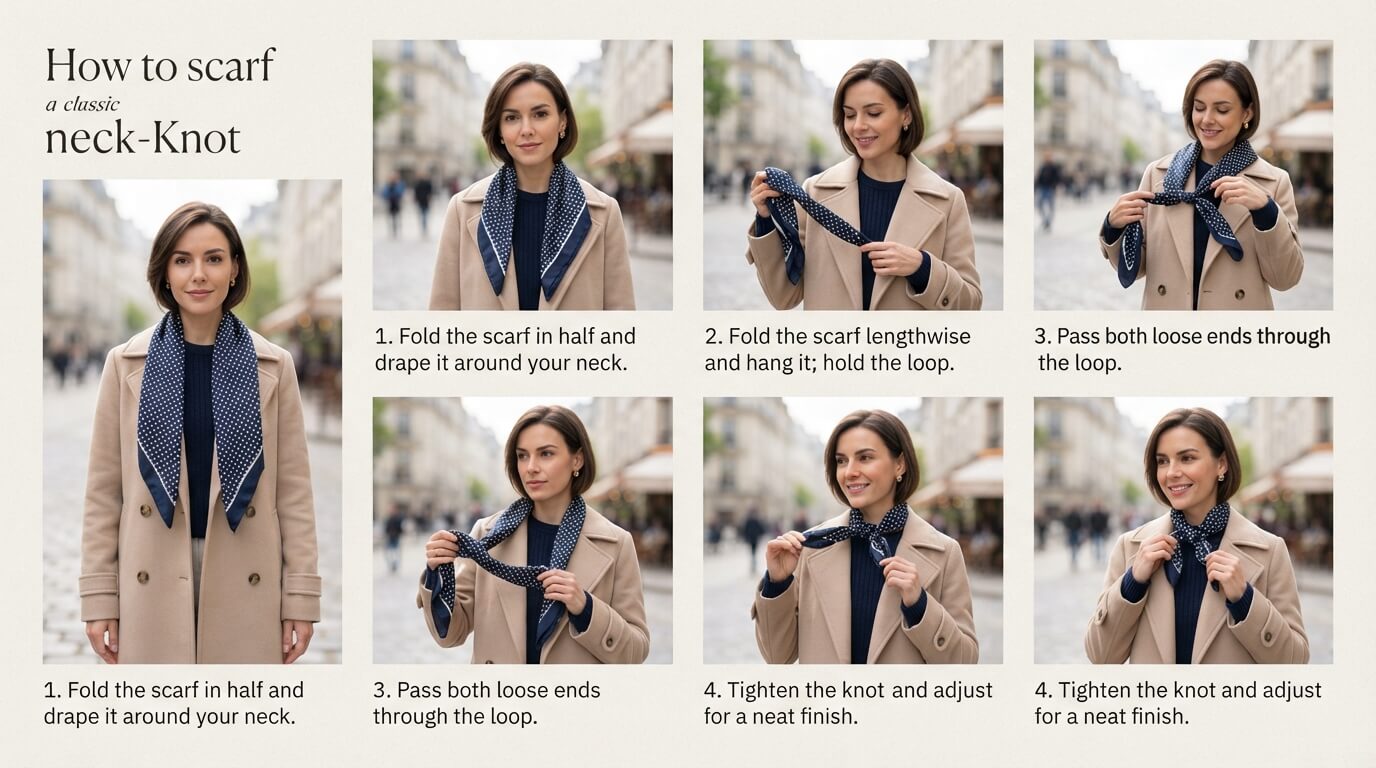
The classic knot is the easiest way to tie a neck scarf, and it looks great for both casual and slightly dressier occasions. This method works with most types of scarves, though it works best with lighter fabrics that don’t bulk up too much.
To tie the classic knot, start by draping your scarf around your neck with both ends hanging down in front. Make sure the ends are roughly even in length. Take the right end of the scarf and cross it over the left end, creating an X shape. Now take that same right end and wrap it under and around the left end. Pull the right end up through the loop you’ve created around your neck. Finally, tighten the knot by holding both ends and pulling gently until it sits nicely at your throat.
This knot takes about thirty seconds once you get the hang of it. It sits close to your neck and looks neat and put-together. The beauty of this method is that it works with almost any length of scarf, and you can adjust how tight or loose it sits based on your comfort level.
The Loop Drape: Effortless and Elegant
If you want something that looks fancy but requires almost no effort, the loop drape is your best friend. This method works beautifully with longer scarves and creates a soft, flowing look that works for casual days and professional settings alike.
Start with your scarf draped loosely around your neck. Let both ends hang down evenly in front of your body. That’s it. The beauty of this style is its simplicity. You can leave both ends hanging, or you can take one end and tuck it into your shirt or sweater for a slightly more anchored look. This drape works especially well with lightweight fabrics like silk or cotton blends because the fabric moves nicely and drapes in an appealing way.
Some people like to adjust the height of the loop at the back of their neck, bringing it up higher or leaving it lower depending on the look they’re going for. You can also wrap the scarf around once or twice before letting the ends hang, which creates a fuller appearance at the neck.
The Wrap and Tuck: Practical and Versatile
The wrap and tuck style is perfect when you want something that stays in place without looking fussy. This method keeps your scarf secure throughout the day, and it looks polished in any setting.
Begin by wrapping your scarf around your neck once, with one end slightly longer than the other. Take the longer end and wrap it around your neck a second time. Now take that same longer end and tuck it through the loops you’ve created at the front. You can tuck it under both loops or just one, depending on how layered you want the look to be.
This technique works particularly well with medium to longer scarves. The wrapping creates a warm layer that feels cozy, and the tucked end stays in place without sliding around. It’s a practical choice for days when you’re rushing around or doing active things, because your scarf won’t come undone.
The Parisian Knot: Chic and Put-Together
The Parisian knot is a classic method that looks fancier than it actually is. Many people see this knot and think it must be complicated, but it’s actually quite straightforward once you understand the steps.
Drape your scarf around your neck with both ends hanging down in front. Cross the right end over the left end. Now take the right end and bring it up behind the left end, then pull it down through the loop at the front of your neck. Tighten gently until the knot sits at a comfortable position.
The Parisian knot creates a small, neat knot that looks elegant and intentional. It works well with a variety of fabrics and looks good in both casual and formal settings. Once you master this technique, you’ll probably use it all the time because it takes just a minute and always looks sophisticated.
The Loose Bow: Fun and Fashionable
If you want your scarf to make a bold statement, try tying it as a loose bow. This method is playful and works great for casual outfits or when you want to add a fun touch to something simple.
Drape your scarf around your neck with both ends hanging evenly in front. Cross the right end over the left end and tie a simple knot, just like you would when starting to tie shoelaces. Don’t pull it tight. Now create two loops with the remaining ends and tie another knot to secure the bow. Adjust the loops until they look balanced and appealing.
The loose bow takes a bit more effort than some other methods, but it creates a really charming look. It works best with printed scarves or scarves in bold colors because the bow creates a focal point at your neck. You can wear the bow at the center of your chest or off to one side for a more casual vibe.
The Ascot Tie: Traditional and Refined
The ascot tie is a more formal style that works well for dressier occasions. It looks sophisticated and gives off a professional air.
Drape your scarf around your neck with the right end longer than the left. Cross the right end over the left end, then wrap the right end around and through the loop at the front. Bring the right end back down and tuck it into your shirt or sweater, letting the crossed section sit at your throat like a traditional tie.
This method takes a bit of practice to get the proportions right, but once you nail it, you’ll have a stylish option for professional settings or elevated casual outfits. The ascot look works best with scarves in solid colors or subtle patterns, as bold prints can look overwhelming in this style.
Choosing Your Scarf Fabric and Length
Different fabrics and lengths work better for different tying methods. Lightweight fabrics like silk drape beautifully and work well for loose drapes and flowing styles. Heavier fabrics like wool or cotton blends hold knots better and look great when tied more securely.
Scarf length also matters. Short scarves work best for simple knots and wraps because you don’t have excess fabric to deal with. Medium to long scarves give you more flexibility and allow you to try different draping and wrapping methods. Extra-long scarves let you get creative and try more complex wrapping techniques.
Consider your body type as well. Longer scarves often work well for petite frames because they create length and proportion. Shorter scarves can work beautifully on taller frames because they don’t get lost on your body.
Common Mistakes People Make
Many people struggle with scarves simply because they’re making a few basic mistakes. The most common error is tying the scarf too tight. A scarf should never cut off your circulation or feel like it’s choking you. Aim for comfortable and snug, not restrictive.
Another mistake is not using the right knot for your scarf type. A heavy wool scarf in a tight, small knot looks awkward and uncomfortable. Similarly, tying a delicate silk scarf too loosely can make it slide around and look messy.
People also fail to check themselves in a mirror before heading out. A quick mirror check takes fifteen seconds and can save you from walking around with a crooked or lopsided scarf all day.
Finally, many people don’t realize that the length of the hanging ends matters. If your scarf ends hang below your chest, they can make you look shorter or throw off your proportions. Adjust the length so the ends sit at a flattering spot on your body.
How to Keep Your Scarf Looking Fresh
A scarf looks best when it’s clean and well-maintained. Wash your scarves regularly according to the fabric type. Silk scarves generally need hand washing, while cotton blends often do fine in the washing machine on a gentle cycle.
After washing, hang your scarves to dry rather than tossing them in the dryer. This prevents shrinking and keeps the fabric in good shape. Iron your scarves on low heat if they wrinkle, or simply hang them up after washing and let gravity help with the wrinkles.
Store your scarves by rolling them or hanging them on a scarf rack. Avoid bunching them in a drawer, because this can create permanent creases. Good storage keeps your scarves looking newer for longer.
Styling Your Scarf with Different Outfits
The beauty of scarves is that they work with almost everything. Pair a solid-colored scarf with a patterned outfit to balance the look. Add a patterned scarf to a solid outfit to bring in color and visual interest.
Scarves work great with casual outfits like jeans and sweaters. They also dress up simple looks, so you can wear a scarf with basic pieces and instantly look more intentional. For professional settings, a neat knot in a solid color or subtle pattern projects competence and style.
In warmer weather, lightweight scarves in breathable fabrics give you color and accessorizing options without overheating. In cold weather, heavier scarves wrapped multiple times provide warmth and coziness along with style.
Tips for Looking Polished
A few simple practices help your scarf look great every time you wear it.
First, make sure your scarf is smooth before you tie it. Wrinkles and bunched fabric look sloppy, so take a second to smooth it out.
Second, keep your scarf centered. An off-center scarf looks accidental rather than intentional. Check a mirror to make sure everything lines up.
Third, match your scarf style to the occasion. A tight, formal knot works better for work or special events. A loose, casual drape suits everyday activities.
Fourth, keep the ends of your scarf from flipping or twisting throughout the day. You can tuck loose ends into your shirt or sweater, or use a small pin to keep everything in place.
Finally, have confidence in your choice. Scarves are meant to be worn boldly. When you feel good about how you look, other people notice and respond positively.
Experimenting with Your Style
Don’t be afraid to try different tying methods and see what works best for you. Your personal style matters more than any rule about the “correct” way to tie a scarf. Some people love the simplicity of a basic drape, while others prefer the neat appearance of a structured knot. Both look great.
Try different styles with different outfits until you find what makes you feel confident and comfortable. You’ll probably discover that you have a few go-to methods that you use most often, along with a few special techniques for particular occasions.
Wrapping Up Your Scarf Skills
Tying a neck scarf doesn’t have to be intimidating or complicated. Start with the simplest methods like the basic knot or the loop drape, practice them a few times, and then branch out to other styles as you get comfortable. Each method takes just a minute or two once you know the steps.
The key is to practice a little bit and then trust yourself. Your scarf is there to make you look and feel good. When you tie it with confidence and care, it becomes a powerful part of your personal style.
Now that you know several different methods, grab a scarf and start practicing. You’ll be amazed at how quickly the techniques become second nature. Soon you’ll be tying scarves without thinking about it, just like tying your shoes. And that’s when scarves become truly valuable—when they’re so easy to use that you actually wear them all the time, adding style and personality to everything you put on.
Your neck scarf journey starts now. Go tie some scarves, experiment with different styles, and have fun with this versatile accessory. You’ve got this.
Mary is a fashion enthusiast and lifestyle writer who loves discovering stylish clothing, accessories, and everyday fashion essentials. She enjoys researching the latest trends, reviewing popular products, and sharing practical style tips to help readers dress with confidence. Through FashionSolve.com, Mary provides honest recommendations, fashion guides, and inspiration for building a wardrobe that is both stylish and affordable.