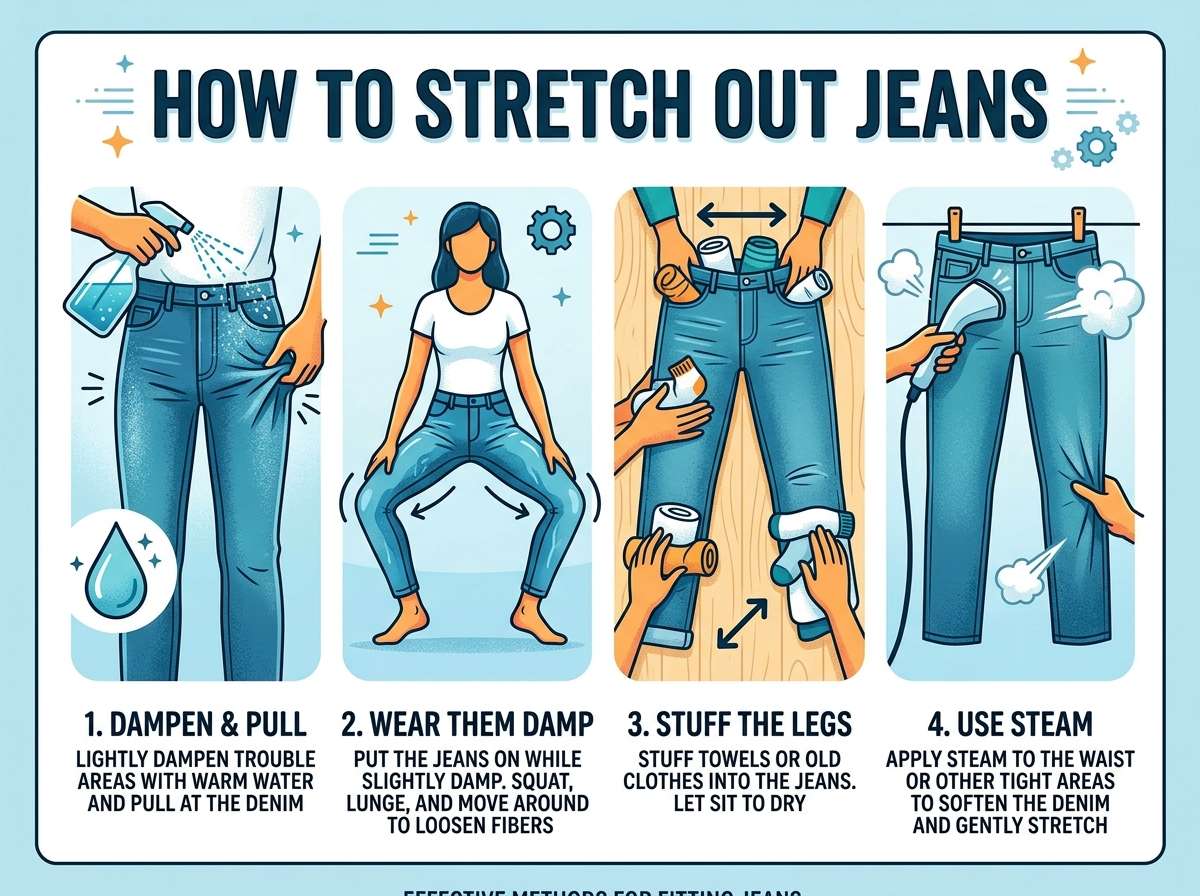
How to Stretch Out Jeans?
Jeans are a wardrobe staple. Most people own at least one pair. They work for casual days, dressed-up nights, and everything in between. But here’s the problem: jeans can feel tight. They might pinch your waist. They might be too snug in the thighs. The inseam might feel short. When your jeans don’t fit right, wearing them becomes torture.
The good news? You can stretch out your jeans at home. You don’t need special tools. You don’t need to spend a lot of money. You don’t even need to take them to a tailor. Let me show you how.
Why Jeans Get Tight in the First Place
Before you stretch anything, it helps to know why jeans feel tight. Denim fabric shrinks. This happens when you wash and dry your jeans. Hot water speeds up this process. Hot dryers make it worse. Even the way jeans are made contributes to the snug feeling. Manufacturers shrink-treat denim before it gets cut and sewn.
When you first buy jeans, they might feel stiff. This is normal. Wearing them breaks them in. They naturally loosen up over time. The problem starts when you wash them. Heat causes denim fibers to tighten and shrink. After several washes, your favorite jeans can go from perfect to painfully tight.
Length changes too. Your jeans might be half an inch shorter after a hot wash. Thighs, waistbands, and calves all shrink together. This is why many people avoid washing their jeans regularly. They fear the shrinkage.
The solution is simple. You can reverse much of this shrinkage. You can get your jeans back to their original size. You might even stretch them out bigger than they started. The key is using the right techniques and being patient.
Method 1: The Water and Wear Technique
This is the easiest method. It requires almost nothing. You need water, your body, and a few minutes of your time.
Start by filling a bathtub with lukewarm water. Don’t use hot water. Don’t use cold water either. Lukewarm is perfect. Add a small amount of fabric softener if you want. This isn’t required, but it helps relax the fibers in the denim.
Put on the jeans while they’re dry. Button them. Zip them. Get them as snug as you want them to be. Now step into the bathtub full of water. Sit down. Soak in the water for about ten to fifteen minutes. The water will soak into the denim completely.
While you’re soaking, move around a little. Stretch your legs. Move your hips. This helps the wet denim stretch as it gets wet. The movement helps fibers relax and shift.
After fifteen minutes, get out of the bathtub. Walk around your house in the wet jeans. Do this for at least thirty minutes. Walk up and down stairs. Sit down and stand up. Squat a little. These movements stretch the fabric while it’s wet and flexible.
The goal is to keep the jeans on until they dry completely. This takes several hours. You want them to dry while stretched out on your body. The denim will shrink back slightly as it dries, but it won’t return to its original tight size. It will settle somewhere in between.
Hang dry your jeans instead of using the dryer. Dryers create heat, and heat shrinks denim. Open a window if the weather is nice. Let air flow around the jeans. This gives you the best results.
This method works great for jeans that are just a little bit tight. If your jeans are very snug, you’ll need a stronger approach.
Method 2: The Spray Bottle Method
This approach gives you more control. You don’t have to soak your entire body. You target specific areas that need stretching.
Fill a spray bottle with water. Regular tap water works fine. You want the water to be warm, not hot. Fill the bottle and let it sit until it reaches room temperature, or use lukewarm water from the tap.
Lay your jeans flat on a clean surface. A bed works great. A table works too. Smooth out any wrinkles. Look at the areas that feel tight. These are the spots you’ll target.
Start spraying the problem areas. Spray the waistband if it’s tight. Spray the thighs if they feel snug. Spray the calves if that’s where the tension is. Spray until the fabric is damp. Don’t soak it. Damp is different from soaked. You want the water to penetrate the fibers without making puddles.
Once the jeans are damp, put them on. Wear them while they dry. Walk around. Sit down. Bend your knees. Move in ways that stretch the damp fabric. The movement helps relax the fibers.
As the jeans dry, they’ll loosen up. The stretched-out areas will stay stretched. This method is great because you only wet the parts that need attention. You’re not soaking the entire garment. This means less overall shrinkage when everything dries.
Again, hang dry instead of using the dryer. Air drying preserves the stretched-out shape better than machine drying ever could.
Method 3: The Damp Heat Method
This technique uses moisture and body heat together. The combination is powerful for stretching tight denim.
Start by spraying your jeans with the water bottle method. Make them damp like we discussed above. Now put them on and sit in the sun. If you don’t have direct sunlight, just sit indoors in a warm spot. A room with good sunlight works perfectly.
As the jeans dry in the warmth, they’ll stretch. The heat relaxes the fibers. Your body provides gentle, steady pressure from the inside. This combination creates gradual, even stretching across the entire garment.
You can also use a hairdryer on a low setting. Blow the warm air over damp jeans while wearing them. Keep the hairdryer at least six inches away from the fabric. Move it constantly so you don’t overheat one spot. Low heat is key. High heat can damage denim and might shrink it instead of stretching it.
Spend at least thirty minutes in the heat. Longer is better. The more time the fabric spends in this stretched state while it dries, the better the results.
Method 4: The Vinegar Soak
Vinegar is a secret weapon for denim stretching. It relaxes the fibers in ways that water alone cannot. This method works best for really stubborn, tight jeans.
Fill your bathtub with lukewarm water. Add one cup of white vinegar to the water. Mix it around. The smell will be strong at first. Don’t worry. The vinegar smell will fade as everything dries.
Submerge your jeans completely in the vinegar water. Let them soak for thirty minutes. You can stay out of the tub during this time. The vinegar does the work, not your body.
After thirty minutes, drain the tub. Rinse your jeans with fresh, cool water. Squeeze out excess water but don’t wring them out. Wringing can cause damage.
Now put on the damp jeans. Wear them until they’re completely dry. Walk around. Move your body. The vinegar will have relaxed the fibers significantly. Combined with your movement, this creates excellent stretching results.
The vinegar scent will fade quickly. Usually by the time the jeans are dry, you won’t notice it anymore. If you do, hang them outside for a few hours. Fresh air helps eliminate the smell.
Method 5: The Weighted Stretching Method
This technique uses gravity and weight to stretch your jeans. It’s perfect if you want to make them longer or target very tight areas.
Start by dampening your jeans with the spray bottle. Make them noticeably damp. Hang them on a sturdy hanger. Make sure the hanger is strong enough to hold the weight. Plastic hangers might bend. Wire hangers work better. Wooden hangers are ideal.
Now add weight to the bottoms. You can clip wet towels to the legs. You can hang small weights from the pant legs. You can place the legs in buckets of water. The weight pulls the fabric downward. This creates constant, gentle stretching as the jeans dry.
Leave the jeans hanging with weight for several hours. Eight hours is a good starting point. Longer is fine too. You can even leave them overnight.
This method excels at lengthening jeans. It also works well for stretching the thighs and calves. The constant downward pull gradually extends the fabric.
Method 6: The Conditioner Trick
Hair conditioner isn’t just for your head. It works wonders on denim too. Conditioner relaxes fibers. It makes them pliable. This makes stretching easier.
Fill a bathtub with lukewarm water. Add a generous amount of hair conditioner. You want the water to feel slippery and slick. Mix it well.
Submerge your jeans. Let them soak for thirty minutes. The conditioner will penetrate the fabric and relax the fibers completely. The jeans will feel very soft when you take them out.
After soaking, rinse the jeans gently with cool water. You can leave a tiny bit of conditioner in the fabric. This actually helps with the stretching process.
Put on the damp jeans immediately. Wear them until completely dry. The conditioner-treated fabric will stretch more easily. You might notice the jeans loosen more with this method than with plain water soaking.
Your jeans will feel incredibly soft afterward. That’s a bonus benefit. The conditioner leaves them silky even after they dry.
Method 7: The Knee and Thigh Stretch
Some jeans are only tight in specific areas. Your thighs might feel squeezed. Your knees might feel restricted. This targeted approach solves those problems.
Dampen just the problem areas using your spray bottle. If the knees are tight, spray only the knee area. If the thighs are snug, spray those spots. Keep the rest of the jeans relatively dry.
Put on the damp jeans. Focus your movements on the tight areas. If your thighs are the problem, do lunges. Do squats. Stretch your legs out in front of you. These movements extend the fibers in that specific area.
If your knees are the issue, bend and straighten your legs repeatedly. Do this for several minutes. The repeated bending stretches the fabric across your knees. It’s like giving the jeans a targeted workout.
Keep moving until the jeans are completely dry. By then, those tight spots should feel noticeably looser.
Method 8: The Professional Approach
Sometimes you just want expert help. Dry cleaners can stretch jeans. Tailors can stretch jeans. Some laundromats offer professional garment stretching services.
Professional stretching uses industrial equipment. They have machines designed specifically for this job. The machines apply precise pressure and heat. They can stretch fabric evenly without damaging it.
The downside is cost. Professional stretching isn’t free. It usually costs between five and twenty dollars per garment. That might be worth it if your jeans are expensive or if home methods haven’t worked.
Ask your dry cleaner about their stretching services. Ask about their experience with denim specifically. Some cleaners are better at this than others. Reading online reviews helps you find the best local option.
Important Tips for Success
Success requires knowing a few key principles. Follow these tips and you’ll get great results every time.
Never use hot water. Hot water shrinks denim. It’s the enemy of stretching. Always use lukewarm or cool water. This is the most important rule.
Never use a dryer. Machine drying applies intense heat. This heat can shrink your jeans right back to tight. Hang dry always. Air drying takes longer, but the results are much better. Your jeans will stay stretched longer too.
Move your body while the jeans are damp. Don’t just sit around. The movement stretches the fabric. Walking, stretching, bending, and twisting all help. The more you move, the more even your stretching will be.
Be patient. Stretching takes time. The process usually takes several hours. Sometimes it takes a full day. Don’t rush it. Good results come from patience.
Test the fit as the jeans dry. Try them on after a couple of hours. See how much they’ve already stretched. You can add more dampness if needed. You can increase movement if needed. This way you can control exactly how much stretching happens.
Stretch gradually. Don’t try to stretch your jeans five sizes up. That won’t work. You’ll just damage them. Focus on small improvements. A half inch to one inch of extra room is realistic. Multiple stretching sessions over time work better than one intense session.
Maintaining Your Stretched Jeans
Once you’ve stretched your jeans to the perfect fit, you want to keep them that way. The right care makes all the difference.
Wash your jeans inside out. This protects the outside color. It also reduces friction during washing. Less friction means less wear and tear.
Use cold water only. Cold water cleans your jeans without shrinking them. Hot water will cause some shrinkage. You might have to re-stretch them if you use hot water.
Use a gentle cycle on your washing machine. Delicate or hand wash settings work best. These gentle cycles are easier on the fabric. They reduce the amount of shrinkage that happens.
Avoid bleach. Bleach can damage denim. It also can cause uneven fading. Plain detergent works fine.
Skip the dryer completely. Always hang dry. You can hang them inside the house. You can hang them outside in the sun. Anywhere that has air circulation works. Fresh air and time do the job better than heat ever could.
If your jeans start to feel tight again after washing, repeat one of the stretching methods. A quick spray bottle treatment usually fixes it. You don’t need a full soak. Quick touch-ups keep your jeans at the perfect fit.
How Long Will Stretched Jeans Stay Stretched?
This is a common question. The answer depends on several factors.
If you use the water and wear method, the stretching usually lasts through several washes. Most people find that their jeans return to needing another stretching session after about five to ten washes.
If you use the vinegar method or conditioner method, the results typically last longer. These methods relax the fibers more deeply. You might get ten to twenty washes before needing another stretch session.
The key is preventing unnecessary shrinkage. Use cold water. Use gentle cycles. Always hang dry. These habits keep your stretched jeans in great shape for as long as possible.
Over time, denim does break in. It gets softer. It gets looser naturally. You’ll find that jeans worn frequently loosen up on their own. This is actually good. It means less stretching work on your part.
Common Mistakes to Avoid
Learning what not to do is just as important as learning what to do.
Don’t use hot water. We’ve said this before. Hot water is the biggest threat to your stretching efforts. It shrinks denim faster than anything else.
Don’t leave jeans damp for days. Damp fabric can develop mildew or mold. Stretch them while damp, then dry them quickly. You want the jeans damp during stretching. Once you’re done moving and stretching, get them dry.
Don’t stretch jeans that are already too loose. You can’t make them tighter. Once they’re stretched out, that’s the new size. Make sure you only stretch jeans that actually need it.
Don’t expect overnight results. Stretching takes time. Results come gradually as the fibers relax and adjust. Don’t panic if you don’t see change after one hour. Give it a full day.
Don’t overstretch in one direction. Try to move in many directions. Walk forward. Walk backward. Squat. Stretch your legs out. Side lunges. These varied movements create even stretching. If you only walk forward, the front might stretch more than the back.
Don’t ignore warning signs. If your jeans start to feel thin, stop stretching. If you see tears forming, stop immediately. Some jeans are at their stretching limit. Pushing beyond that causes damage.
When to Replace Instead of Stretch
Sometimes stretching isn’t the answer. There are times when you should just get new jeans.
If your jeans are already very old, stretching might not help. Old denim has lost its elasticity. The fibers are tired. They don’t respond to stretching like newer jeans do. If the jeans are falling apart, replacements make sense.
If your jeans don’t actually fit you. Maybe they’re three sizes too small. Maybe they’re the wrong cut for your body. Stretching has limits. It can make small adjustments. It can’t transform a completely wrong pair into a perfect fit.
If stretching keeps making holes. If you see weak spots appearing, your jeans are telling you they’re done. Pushing further will only create tears and holes. That’s when it’s time to shop.
If the color is fading badly or the fabric is pilling heavily, the jeans might be past their prime. Stretching a worn-out pair is using energy on something already struggling. New jeans will serve you better.
Quick Reference: Method Comparison
Here’s a fast summary of which method works best for different situations.
Water and wear is the easiest. It works for general tightness. It requires the least effort.
The spray bottle method is fastest. You can do it in an afternoon. It works well for targeted areas.
Vinegar soak is strongest. Use it when other methods haven’t worked. It’s perfect for very tight jeans.
The conditioner method is gentlest. It leaves your jeans extra soft. It works well for sensitive fabrics.
Weighted stretching is best for length. If you need to add inches to the inseam, this works great.
Professional stretching is for stubborn cases. Use it when home methods have failed. It’s pricey but reliable.
Final Thoughts
Stretching jeans is easier than most people think. You have eight solid methods to choose from. Each one works. The best method is the one you’ll actually use. If you hate sitting in water, use the spray bottle method instead. If you want the strongest results, go with vinegar. If you want the softest feeling, choose conditioner.
The most important thing is starting. Don’t wear tight, uncomfortable jeans. Take thirty minutes to an hour. Try one of these methods. You’ll be amazed at the difference. Your jeans will fit better. You’ll be more comfortable. You’ll wear them more often.
Tight jeans no longer have to be a problem. You have the knowledge and the techniques. Now go stretch those jeans. Make them work for you instead of against you. Your waistline will thank you.

Mary is a fashion enthusiast and lifestyle writer who loves discovering stylish clothing, accessories, and everyday fashion essentials. She enjoys researching the latest trends, reviewing popular products, and sharing practical style tips to help readers dress with confidence. Through FashionSolve.com, Mary provides honest recommendations, fashion guides, and inspiration for building a wardrobe that is both stylish and affordable.