How Long Should Hair Be to Wax?
If you are getting ready for your first wax or you just want smoother skin without any mistakes, one question always comes up first: how long should your hair actually be before you wax it? This is not a small detail. It is the single biggest factor that decides how well your wax session goes, how much it hurts, and how long your results last.
In this guide, we will break down the exact hair length you need for waxing, why it matters so much, and what happens if your hair is too short or too long. We will also talk about different body parts, growth cycles, and tips that make the whole process smoother. Everything here is written in plain, simple words so anyone can follow along, even if this is your very first time trying wax.
The Short Answer: Aim for a Quarter Inch
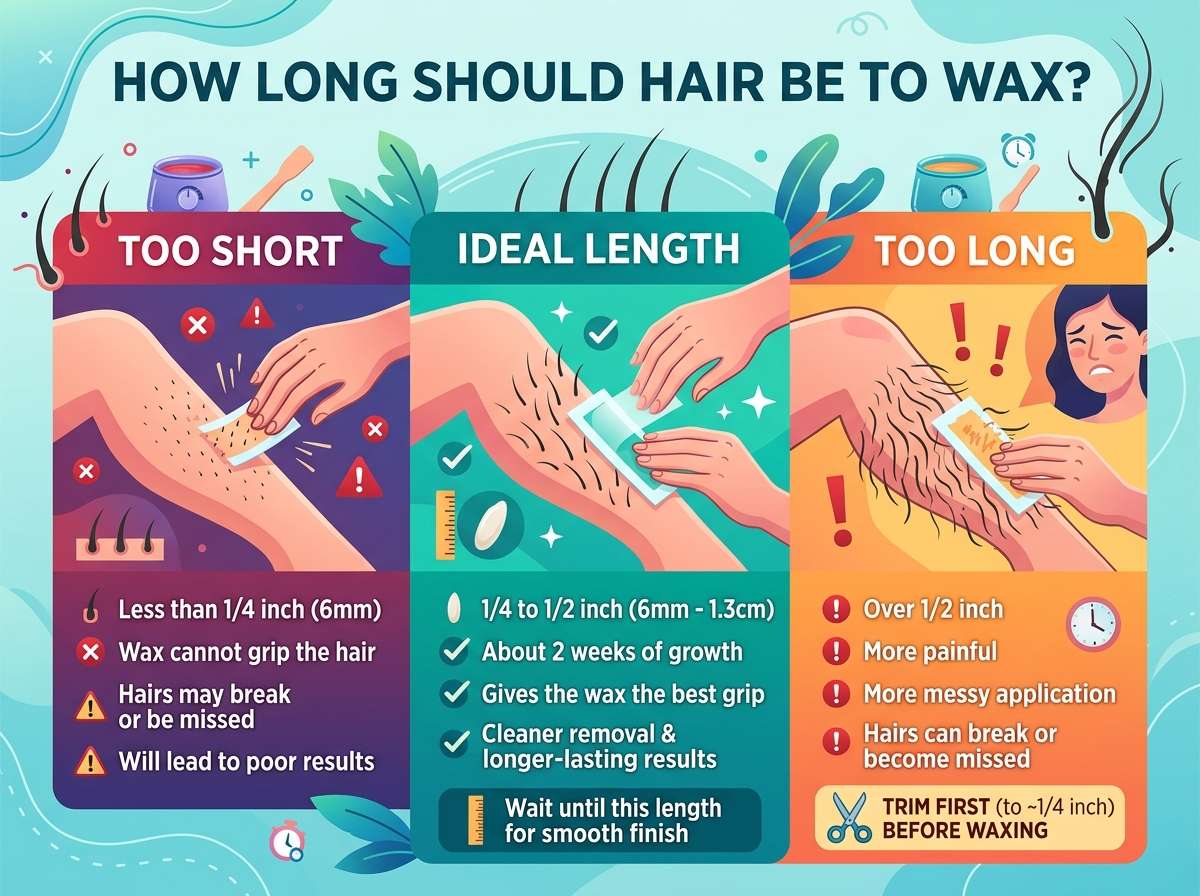
Most estheticians and waxing experts agree on one golden rule: your hair should be about a quarter inch long, which is roughly 6 millimeters. If you like to picture it in everyday terms, that is about the same length as a single grain of rice.
This length is the sweet spot. It gives the wax enough hair to grip onto, so the strip or hard wax can pull the hair out cleanly from the root. If the hair is shorter than this, the wax simply cannot hold on tight enough, and you will end up with patchy results, broken hairs, or wasted product.
A quarter inch usually means you need to let your hair grow for about two to three weeks after shaving or after your last wax session before booking your next appointment. This waiting period feels annoying for a lot of people, especially if you are used to shaving every few days, but it really is worth it for a clean, long-lasting result.
Why Hair Length Actually Matters So Much
You might wonder why such a tiny detail like hair length can make or break a waxing session. Here is the simple reason: wax works by sticking to the hair shaft and pulling it out from the follicle, root and all. For that to happen properly, the wax needs enough surface area on the hair to hold onto.
Think of it like trying to pull a rope out of the ground. If the rope is long enough, you can grab it firmly and pull it straight out. But if only a tiny stub is poking out of the ground, your grip slips, and you end up snapping the rope instead of removing it fully.
Hair works the same way. Short hair breaks instead of coming out from the root. This leads to a few problems:
- Ingrown hairs, because the broken hair grows back sideways or trapped under the skin
- Uneven results, with some hairs removed and others left behind
- More pain, because the technician often has to go over the same spot multiple times
- Wasted wax and wasted time during your appointment
On the flip side, hair that is too long also causes trouble, which we will get into shortly. So getting the length just right is really the foundation of a good wax.
What Happens If Your Hair Is Too Short
Let’s say you shaved just a few days ago and now you are booking a wax appointment because you are excited to try it. Unfortunately, this is one of the most common mistakes beginners make.
If your hair is under a quarter inch, here is what usually happens during your session:
The wax cannot grip properly. Short hair slides right through the wax without getting pulled out. Your technician may try adjusting the wax temperature or reapplying multiple times, but this only adds discomfort without much benefit.
You get patchy results. Some hairs come out, but many stay behind because the wax could not catch them. This means your skin will look uneven, with random stubble poking through days later.
Your appointment takes longer. Technicians often need extra time and extra wax to try and catch shorter hairs, which can also mean extra cost if your salon charges based on time or product used.
Skin irritation increases. Going over the same patch of skin again and again with wax strips or hard wax can cause redness, small bumps, or sensitivity, especially on delicate areas like the bikini line or underarms.
If you show up with hair that is too short, many salons will actually turn you away or ask you to reschedule for a later date. This is not them being difficult, it’s simply because the treatment will not work well and might damage your skin instead of helping it.
What Happens If Your Hair Is Too Long
On the other end, letting your hair grow way too long before waxing also creates its own set of problems.
Hair longer than about half an inch to three quarters of an inch tends to be thicker and tougher. This means:
It hurts more. Longer, thicker hair has stronger roots, so pulling it out stings more than removing shorter hair.
It’s harder to manage. Long hair can tangle or clump together in the wax, making the strip or hard wax harder to apply evenly across your skin.
Trimming might be needed first. Many salons will trim your hair down before waxing if it’s too long, which adds an extra step (and sometimes an extra fee) to your appointment.
More product is used. Long, dense hair soaks up more wax, meaning your session might use more product than needed, which can add to the cost.
So the goal really is that middle ground: not too short, not too long, just that ideal quarter-inch length that gives you the best balance between comfort and clean results.
How to Measure Your Hair Length at Home
You don’t need any fancy tools to check if your hair is ready for waxing. Here are a few easy tricks:
Use a ruler. Simply hold a small ruler against your skin near the hair and check if it reaches around a quarter inch, which is about 6 millimeters.
Compare to a grain of rice. As mentioned earlier, a single grain of rice is roughly the same length you are aiming for. Just eyeball your hair next to a grain for a rough comparison.
Try the pinch test. Gently pinch a few hairs between your fingers. If you can comfortably grip them and they feel secure, that’s usually a good sign they are long enough for wax to catch onto.
Count the days. If you shave regularly, mark your calendar or set a reminder on your phone for about two to three weeks after shaving. This gives most people enough time to reach that ideal hair length naturally.
Hair Length Guidelines for Different Body Areas
Not every part of your body grows hair at the same speed, and some areas may need slightly different timing. Let’s go over the most common spots people wax.
Eyebrows
Eyebrow hair grows a bit slower than other areas. For a clean shape, you generally want at least one to two weeks of growth since your last wax or trim. Since eyebrow hairs are naturally thinner, even a small amount of length is often enough for the wax to grip properly.
Upper Lip
Upper lip hair is usually fine and grows fairly fast. About two weeks after your last wax is typically enough time for this delicate area.
Underarms
Underarm hair tends to grow quickly, so you might reach that quarter-inch mark within just one to two weeks after shaving.
Legs and Arms
These areas usually need around two to three weeks of growth time, similar to the general guideline mentioned earlier.
Bikini and Brazilian Areas
This is one of the trickiest areas because the hair here is often coarser and thicker. Waiting the full three weeks is usually recommended to get a proper quarter-inch length. Rushing this can lead to more pain and patchy results in a very sensitive area.
Back and Chest (for men)
Body hair on the back and chest often grows a little slower, so three weeks is a safe bet here as well.
How to Prepare Your Skin Before Waxing
Getting the right hair length is step one, but a few other habits can help your waxing session go even smoother.
Exfoliate a day or two before. Gently scrubbing your skin removes dead skin cells that can trap hair and cause it to grow sideways instead of straight out. This also helps the wax adhere better to the hair rather than sticking to flaky skin.
Avoid moisturizer right before your appointment. Lotions and oils create a barrier between your skin and the wax, making it harder for the wax to grip the hair properly. It’s best to keep the area clean and dry.
Skip sun exposure beforehand. Sunburned or freshly tanned skin is more sensitive, and waxing on top of it can lead to irritation or even damage.
Take a pain reliever if needed. Many people take a mild over-the-counter pain reliever about thirty minutes before their appointment to reduce discomfort, though this is optional and depends on personal preference.
Avoid caffeine before your session. Caffeine can make your skin more sensitive, so some experts suggest skipping your coffee right before a wax appointment.
Common Mistakes People Make With Hair Length
Even with all this information, beginners often trip up in a few common ways. Let’s cover them so you can avoid these pitfalls.
Shaving right before waxing. This is probably the biggest mistake. If you shave a few days before your appointment thinking you’re “getting ready,” you are actually working against yourself, since shaving resets hair growth back to zero.
Waxing too frequently. Some people try to wax every week or two out of habit, but if you don’t give hair enough time to reach the right length, you’re setting yourself up for a painful, less effective session.
Ignoring different growth rates. As mentioned, different body parts grow hair at different speeds. Treating every area the same way can lead to some spots being under-prepared while others are over-prepared.
Trimming too much. If your hair grows past the ideal length, don’t panic and trim it down to almost nothing. A light trim to around a quarter inch is fine, but cutting it too short defeats the purpose entirely.
How Waxing Affects Future Hair Growth
One nice benefit of regular waxing is that, over time, hair often grows back thinner, sparser, and slower compared to shaving. This happens because waxing removes hair from the root, which can gradually damage the hair follicle with repeated sessions.
This means that as you continue waxing regularly, over months and repeated sessions, you might notice:
- Hair growing back softer instead of coarse and stubbly
- Fewer hairs growing back overall in that area
- Longer gaps needed between sessions since regrowth slows down
This is one major reason many people prefer wax over shaving in the long run, even though it can feel more uncomfortable at first.
Tips for First-Time Wax Clients
If this is your very first time waxing, here are a few extra tips to keep in mind alongside the hair length guideline:
Book with a licensed professional. A trained esthetician knows how to read your hair length and adjust wax temperature and technique accordingly, giving you a much smoother first experience.
Communicate openly. Tell your technician if this is your first time. They can walk you through the process, explain what to expect, and check your hair length before starting.
Be patient with the growing phase. The waiting period before your first wax can feel tedious, especially if stubble bothers you, but reminding yourself that it leads to smoother, longer-lasting results can help you push through.
Don’t panic about redness afterward. A little redness or small bumps right after waxing is totally normal and usually fades within a few hours to a day.
Stick to a consistent schedule. Once you find your rhythm, waxing every three to four weeks (depending on your hair growth speed) helps keep hair at that ideal length automatically.
Aftercare Tips to Extend Your Results
Once your wax session is done, taking care of your skin properly helps you enjoy smooth results for longer and prepares your hair for its next growth cycle at the right pace.
Avoid hot showers and baths for a day. Hot water can irritate freshly waxed skin, so lukewarm water is a safer choice right after your session.
Skip tight clothing. Loose, breathable clothes help reduce friction on freshly waxed skin, lowering the chance of irritation or ingrown hairs.
Start exfoliating again after a few days. Once your skin has calmed down, gentle exfoliation two or three times a week helps prevent ingrown hairs as new growth begins.
Moisturize daily. Keeping your skin hydrated helps it heal and stay smooth between sessions.
Avoid other hair removal methods in between. Try not to shave or use hair removal creams between wax sessions, since this messes with the growth cycle and means you’ll be starting from zero hair length again.
Final Thoughts
Getting your hair to the right length really is the foundation of a good waxing experience. Aim for that quarter-inch mark, roughly the size of a grain of rice, and give yourself about two to three weeks after shaving or your last wax to reach it. Skip the temptation to shave right before your appointment, be mindful that different body areas grow at their own pace, and take a bit of time to prepare your skin beforehand.
With the right hair length and a little patience, waxing becomes a much smoother, faster, and less painful process. Over time, as your hair grows back thinner and sparser, you’ll likely find that each session gets easier than the last. So next time you’re counting down the days before your appointment, remember: that little bit of waiting is what makes all the difference between a messy session and smooth, salon-worthy results.

Mary is a fashion enthusiast and lifestyle writer who loves discovering stylish clothing, accessories, and everyday fashion essentials. She enjoys researching the latest trends, reviewing popular products, and sharing practical style tips to help readers dress with confidence. Through FashionSolve.com, Mary provides honest recommendations, fashion guides, and inspiration for building a wardrobe that is both stylish and affordable.