How Often to Get a Haircut?
You just got a fresh haircut. It looks great. You feel great. Then two weeks later, you catch your reflection and something feels off. The edges are growing out. The shape is losing its crispness. And that little voice in your head asks the question every single person asks at some point: how often should I actually be getting a haircut?
It’s a simple question, but the answer isn’t one-size-fits-all. Your hair type, your style, your goals, and even your daily habits all play a part. In this guide, we’ll break down exactly how often you should book that next salon or barber visit, based on real factors that matter, not just a random number someone throws out.
Let’s dig in.
Why There’s No Single Right Answer
Here’s the truth: your friend’s haircut schedule and your schedule can look completely different, and both can be correct. Hair grows at different speeds for different people. On average, hair grows about half an inch per month, but that number shifts based on genetics, age, diet, and even stress levels.
So instead of chasing a magic number like “every 6 weeks” that you saw on some random list, it helps to look at your own hair, your own lifestyle, and your own goals. That’s the smarter way to figure out your ideal haircut rhythm.
That said, there are some solid general guidelines that most hairstylists and barbers agree on. Let’s go through them by hair type and style, since that’s really where the answer lives.
General Haircut Timelines by Hair Length
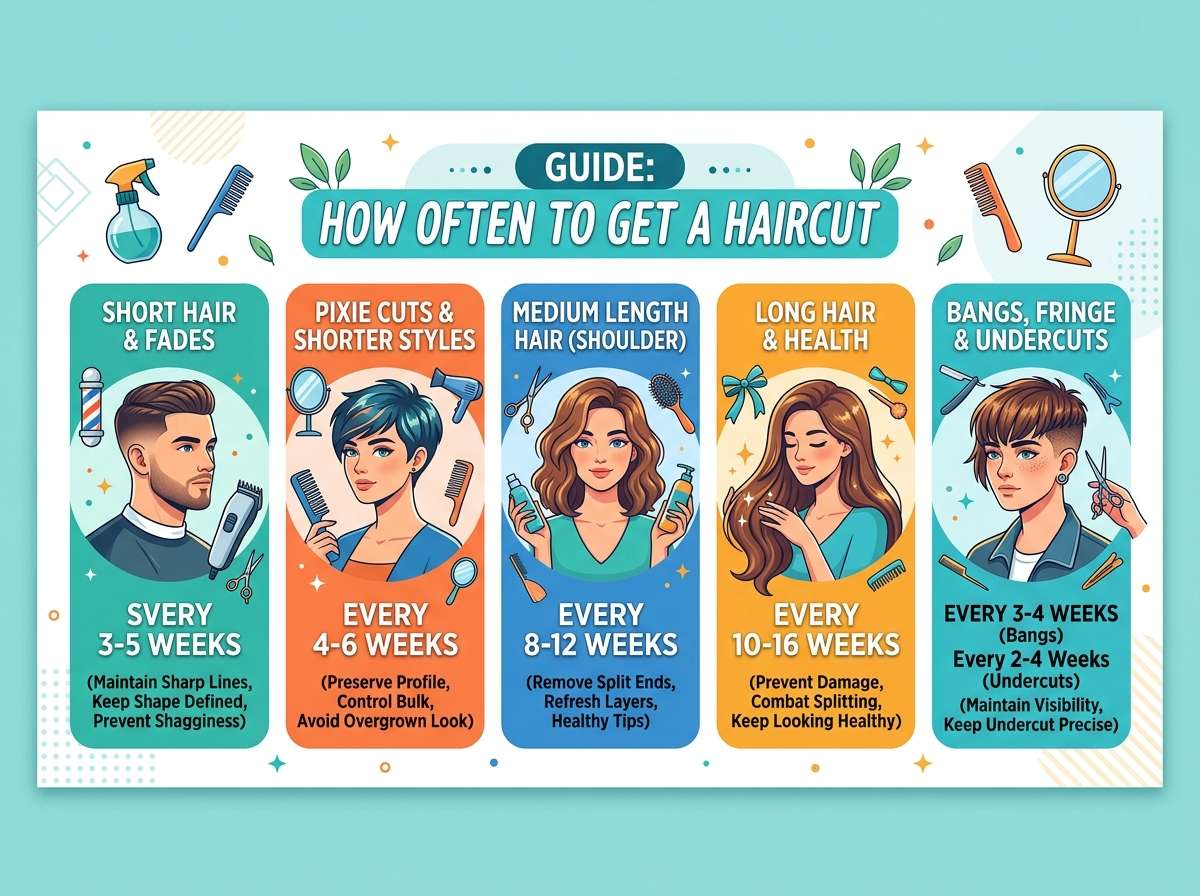
Short Hair (Buzz Cuts, Pixie Cuts, Short Crops)
If your hair is short, you’ll need trims more often. Short styles rely on sharp lines and clean shape to look good, and even a small amount of growth can throw the whole look off balance.
- Buzz cuts: every 2 to 3 weeks
- Pixie cuts: every 4 to 6 weeks
- Short men’s cuts (fades, crew cuts): every 2 to 4 weeks
Short hairstyles grow out fast visually because there’s so little length to begin with. A quarter inch of growth on long hair barely shows. That same quarter inch on a buzz cut is obvious.
Medium Hair (Bobs, Lobs, Shoulder-Length Styles)
Medium-length hair gives you a little more breathing room between visits.
- Bobs: every 6 to 8 weeks
- Lobs (long bobs): every 8 to 10 weeks
- Layered shoulder-length cuts: every 8 to 12 weeks
These styles depend on shape too, but the lines are usually softer than a pixie or buzz cut, so growth is more forgiving.
Long Hair
Long hair is the most flexible when it comes to timing. You’re not chasing a precise shape as much as you’re maintaining overall health.
- Regular trims for healthy ends: every 10 to 14 weeks
- If you’re growing it out and just want to remove split ends: every 3 to 4 months
Long hair doesn’t demand frequent trips to the salon the way short styles do. The main goal here is trimming away damage before it travels up the hair shaft and causes more breakage.
What About Curly and Textured Hair?
Curly, coily, and textured hair behaves differently than straight hair, and the trim schedule should reflect that.
Curls shrink up, so they often look shorter than they actually are, which can trick people into cutting more often than needed. Many curly-hair experts suggest stretching out the time between cuts to every 3 to 4 months, unless you’re maintaining a specific short curly shape, which might need attention every 6 to 8 weeks instead.
Coily hair, especially styles like afros or twist-outs, tends to need less frequent full haircuts but more frequent trims to manage split ends, since coily strands are more prone to breakage. A light trim every 8 to 12 weeks usually works well here.
Signs You Need a Haircut (Even If It Hasn’t Been “Long Enough”)
Calendars are useful, but your hair will actually tell you when it’s time. Watch for these signals instead of just counting weeks:
- Split ends that you can see or feel when you run your fingers through your hair
- Hair that feels dry, brittle, or straw-like at the tips
- Your style has lost its shape completely and looks flat or shapeless
- You’re noticing more tangles than usual
- Your bangs are hitting your eyes or getting in the way
- The color looks dull, especially near the ends
If two or more of these apply to you right now, it’s probably time to book an appointment, regardless of what the calendar says.
How Your Hair Goals Affect Your Schedule
Growing Your Hair Out
If your main goal is length, you still need trims. This might sound backward, but it’s true. Split ends travel upward over time if left alone, and they can force you to cut off way more length later than if you’d just trimmed a tiny bit regularly.
For growth mode, aim for a trim every 10 to 14 weeks. This keeps the ends healthy without sacrificing much length at all. Some hairdressers call this a “dusting,” where they barely snip the very tips.
Maintaining a Specific Style
Styles with structure, like a bob with blunt lines, a fade, or bangs, need way more attention. These looks depend on precision, and precision fades fast. For these, plan on every 4 to 6 weeks, sometimes even every 3 weeks for very sharp styles like a skin fade.
Just Keeping Hair Healthy
If you’re not chasing a particular look and just want to avoid damage, you have the most flexibility. A trim every 3 months is usually enough to keep things in good shape without cutting off length you want to keep.
Men vs Women: Does Gender Change the Timeline?
Not really, but hairstyle trends and typical lengths do differ, which changes the practical schedule.
Men’s cuts, especially fades, tapers, and short styles, tend to need more frequent visits because the contrast between skin and hair grows out quickly and becomes noticeable within just a couple of weeks. Most men with short styles visit the barber every 2 to 4 weeks.
Women’s styles vary a lot more, from pixies that need monthly care to long layers that can go 3 months between trims. The real driver isn’t gender, it’s the style and length you’re working with.
How Hair Type Affects Growth-Out Time
Fine Hair
Fine hair tends to show damage and split ends faster because each strand is more delicate. If you have fine hair, lean toward the shorter end of any range mentioned above.
Thick Hair
Thick hair can often stretch a little longer between cuts since the extra volume and density hide split ends and shape loss better than fine hair does.
Damaged or Chemically Treated Hair
If your hair has been through color treatments, bleaching, perms, or heat styling regularly, it’s more fragile and prone to breakage. In this case, trims every 6 to 8 weeks help prevent damage from spreading and keep your hair looking strong instead of frizzy or brittle.
Does Hair Growth Speed Matter Here?
Yes, actually. People with faster-growing hair might need trims more often just to keep a shape looking clean, even if the health of the hair is fine. On average, hair grows around half an inch each month, though this can be faster or slower depending on genetics, hormones, age, and even the season.
If you notice your hair grows fast and styles lose shape quickly, shorten your typical interval by a couple weeks compared to someone with slower growth.
Bangs: A Special Case
Bangs deserve their own section because they grow out fast and become annoying in a hurry. Full bangs usually need trimming every 3 to 4 weeks just to stay out of your eyes and keep the line looking sharp. Side-swept bangs can stretch a little longer, closer to every 6 weeks, since they blend into the rest of your hair more easily as they grow.
How Often Should Kids Get Haircuts?
Kids’ hair often grows fast, and their styles are usually simple, so a trim every 6 to 8 weeks tends to work well for most children. For very young kids with their first haircuts, there’s no strict rule. It really depends on comfort, length, and whether hair is getting in their eyes or mouth.
What Happens If You Wait Too Long Between Cuts?
Skipping haircuts for too long doesn’t just mean your style looks a little off. It can actually create real problems for your hair’s health.
Split ends multiply and travel up the strand, damaging more hair than if you’d trimmed early. Hair can become more prone to tangling and breakage. Style shape disappears completely, especially for cuts like bobs or fades that rely on precise lines. Hair may feel thinner at the ends, since split hair often breaks off in small pieces over time.
None of this means you need to rush to the salon out of fear. It just means ignoring your hair for many months in a row usually costs you more length and health in the long run than staying on a steady trim schedule would.
What Happens If You Cut Too Often?
On the flip side, cutting way more often than needed isn’t ideal either. If you’re chasing perfection and trimming every couple weeks when your style doesn’t need it, you might end up frustrated that your hair never seems to grow. Trims remove length, so unnecessary cuts slow down your progress if length is part of your goal.
The sweet spot is trimming enough to stay healthy and keep your shape, without cutting away length you actually want to keep.
Tips to Stretch Time Between Haircuts
If you love your current length and want to wait a bit longer before your next cut, here are some easy ways to make that happen without sacrificing your hair’s health.
Use a deep conditioning treatment weekly to keep ends strong and less prone to splitting. Trim ends yourself very lightly with sharp hair scissors if you’re comfortable doing so, just a tiny bit to clean up rough tips. Avoid heat styling tools daily, since heat damage often shows up first at the ends. Use a silk or satin pillowcase to reduce friction and breakage overnight. Brush gently, starting from the ends and working up, instead of tugging through knots.
These small habits can genuinely extend the time between salon visits while keeping your hair looking healthy the whole way through.
How to Talk to Your Stylist About Timing
A lot of people feel awkward asking their stylist how often they should come back. Don’t be shy about this. A good stylist wants your hair to look its best between visits too, and they’ll usually give you a personalized answer based on your exact hair type, cut, and goals.
Ask directly: “Based on my hair, when should I book my next trim?” Most professionals will tell you an exact number of weeks and even set a reminder or rebook you before you leave the chair.
A Simple Cheat Sheet
Here’s a quick summary you can save for reference:
- Buzz cuts: 2 to 3 weeks
- Fades and tapers: 2 to 4 weeks
- Bangs: 3 to 4 weeks
- Pixie cuts: 4 to 6 weeks
- Bobs: 6 to 8 weeks
- Curly styles with shape: 6 to 8 weeks
- Lobs and shoulder-length layers: 8 to 12 weeks
- Long hair for health: 10 to 14 weeks
- Growing hair out: 10 to 14 weeks (light dusting only)
- Textured or coily hair, general trim: 8 to 12 weeks
Use this as a starting point, then adjust based on how your hair actually looks and feels.
Final Thoughts
At the end of the day, how often you get a haircut comes down to a mix of your hair type, your style, and your personal goals. Short styles and sharp lines need more frequent attention. Long hair and low-maintenance looks give you more room to stretch things out. Curly and textured hair often needs less frequent full cuts but steady trims to stay healthy.
The best approach is simple: start with the general timelines above, then pay attention to your own hair. Split ends, dullness, and shape loss will always tell you when it’s time, even if the calendar says otherwise. Talk openly with your stylist, be honest about your goals, and build a routine that keeps your hair looking sharp and feeling healthy all year round.
Your hair, your rules. Just don’t ignore the split ends for too long.

Mary is a fashion enthusiast and lifestyle writer who loves discovering stylish clothing, accessories, and everyday fashion essentials. She enjoys researching the latest trends, reviewing popular products, and sharing practical style tips to help readers dress with confidence. Through FashionSolve.com, Mary provides honest recommendations, fashion guides, and inspiration for building a wardrobe that is both stylish and affordable.